
The KingZendo Collector’s Guide
What Gas Does an S.T. Dupont Lighter Use?
The short answer is butane. The collector’s answer is more exact: every S.T. Dupont family requires the refill color and valve format specified for its model and reference.

First, the essential distinction
Butane is the fuel. The refill code is the fit.
An S.T. Dupont gas lighter uses pressurized butane, not Zippo-style liquid lighter fluid. Yet that one-sentence answer is not enough to refill a precision lighter correctly. S.T. Dupont organizes its refills by color and reference number because the filling valves and nozzles differ among collections, generations and case sizes. Black, red, yellow, green and blue are compatibility codes—not descriptions of the flame, the lacquer or the metal finish.
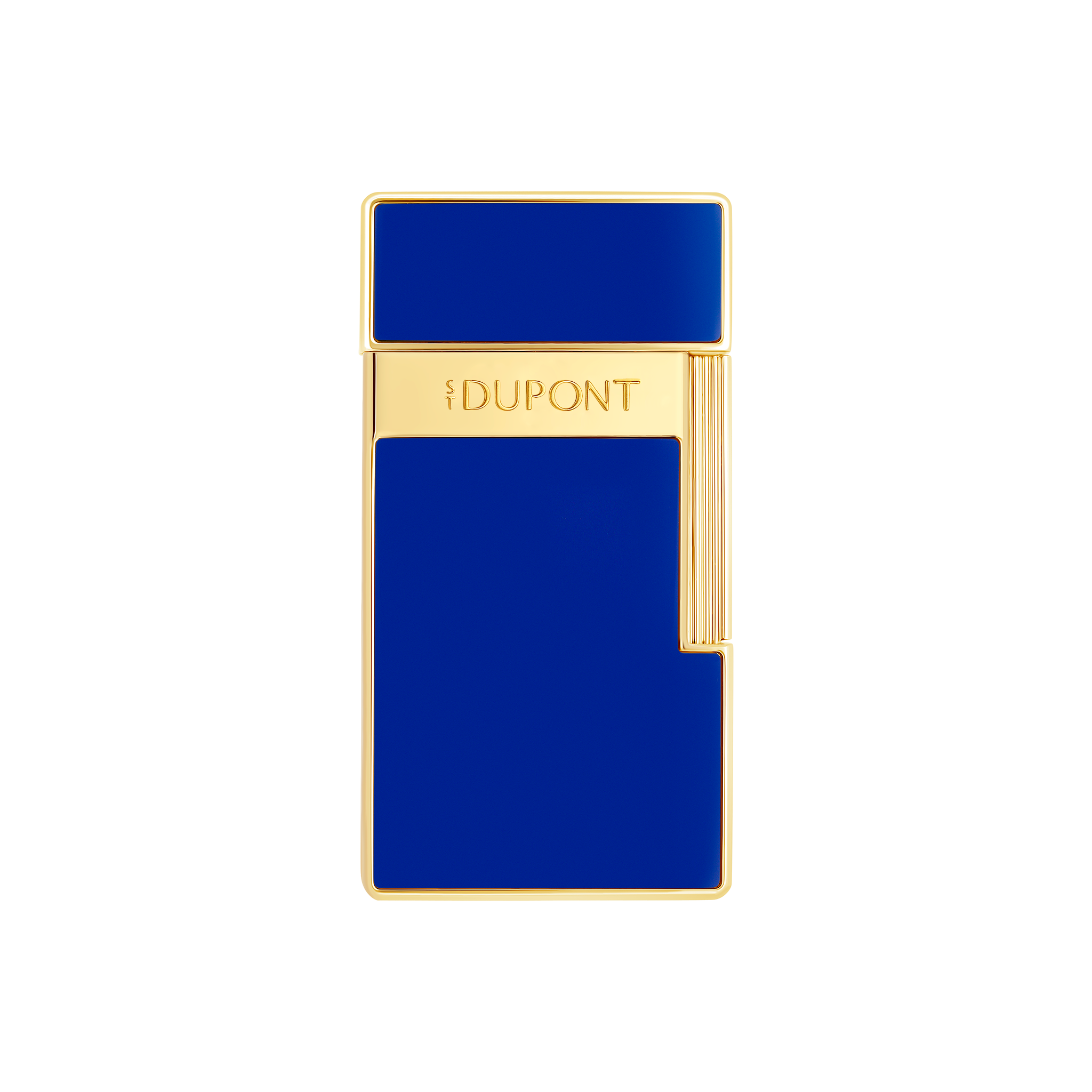
A blue-lacquer Ligne 2 does not automatically take “blue gas,” for example. A classic Ligne 2 with a 016XXX reference is associated with the yellow refill, while a C16XXX model is associated with the red refill. The reference engraved or printed for the lighter is therefore more useful than its appearance.
Compatibility at a glance
Which S.T. Dupont gas refill does your lighter take?
This chart consolidates the manufacturer’s current collection guidance and individual refill listings. It is a starting point, not a substitute for checking the exact reference on the lighter, its booklet or the current product page.
| Refill family | Common reference | Compatible families listed by S.T. Dupont | Collector’s note |
|---|---|---|---|
| Black | 900430 / 000430 multipack | Liberté, Ligne 2 Torch, MiniJet, MaxiJet, Slim 7, The Wand, keychain and miniature chain lighters; current product pages also identify black for several modern jet models. | A frequent choice for contemporary torch families such as Slim 7, MaxiJet and MiniJet. |
| Red | 900435 | Le Grand S.T. Dupont, Ligne 2 Cling C16XXX, Ligne 2 Slim 017XXX, Ligne 1 large model, Jéroboam and cylindrical table lighters. | Common in larger prestige bodies, but do not assume every Ligne 1 or Ligne 2 takes red. |
| Yellow | 900432 / 000432 multipack | Ligne 1 small model, Ligne 2 016XXX and long table lighter. | Especially relevant to many classic full-size Ligne 2 references in the 016 series. |
| Green | 900433 | Gatsby and small Ligne 2 models. | An important vintage and smaller-case distinction that is easy to miss. |
| Blue | 900434 | Ligne Initial, Ligne 8, Ligne D, Mon Dupont, D-Light, Urban and Soubreny. | The blue code refers to compatibility, not a blue torch flame. |
| Défi-specific | 000436 / model-specific listing | Défi Extrême and XXtrême families. | Buy by the exact 436 reference rather than treating it as interchangeable with standard red 900435. |
| Hooked | 900444 / 000444 multipack | Hooked lighter. | A dedicated white-coded refill for this specific family. |


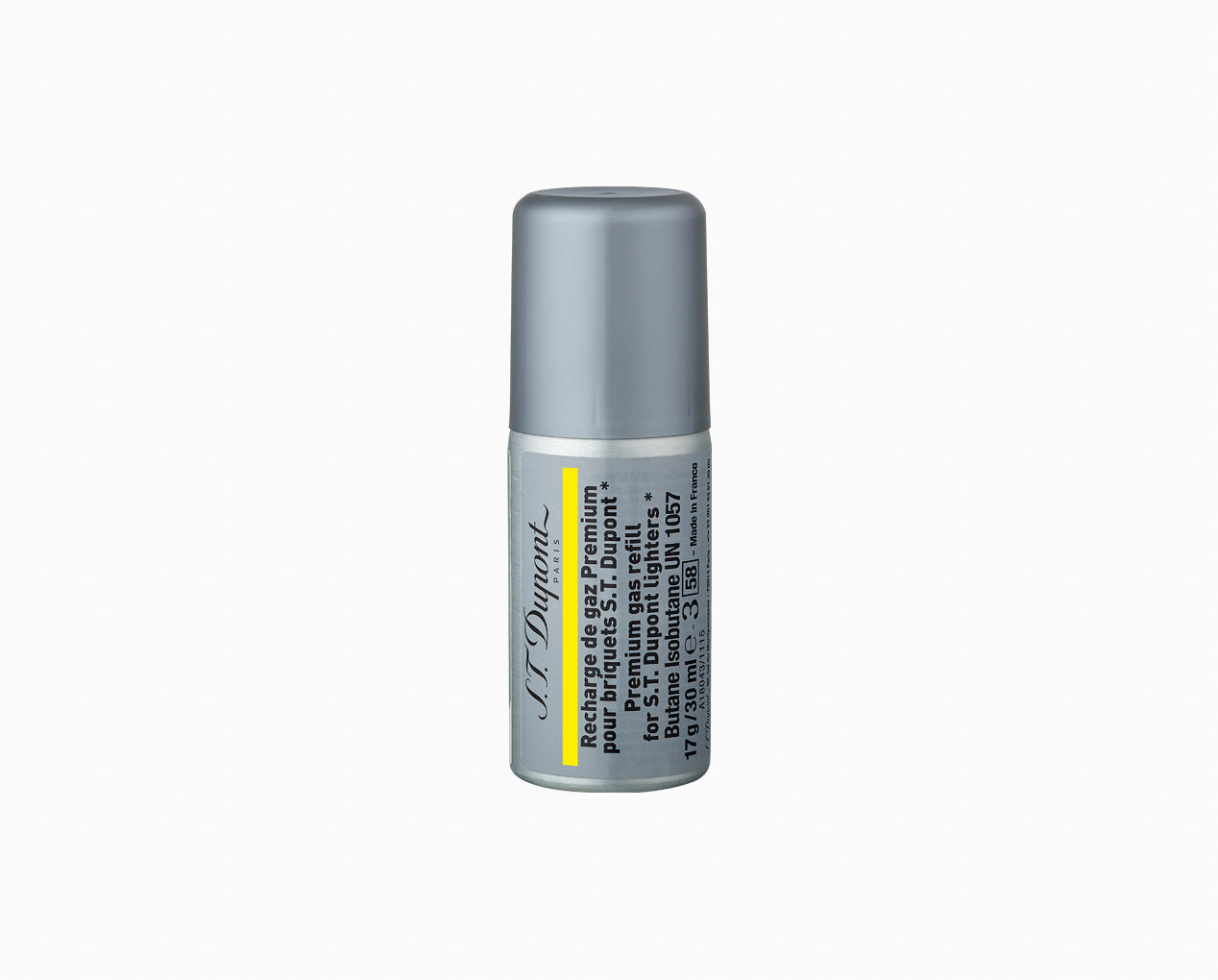
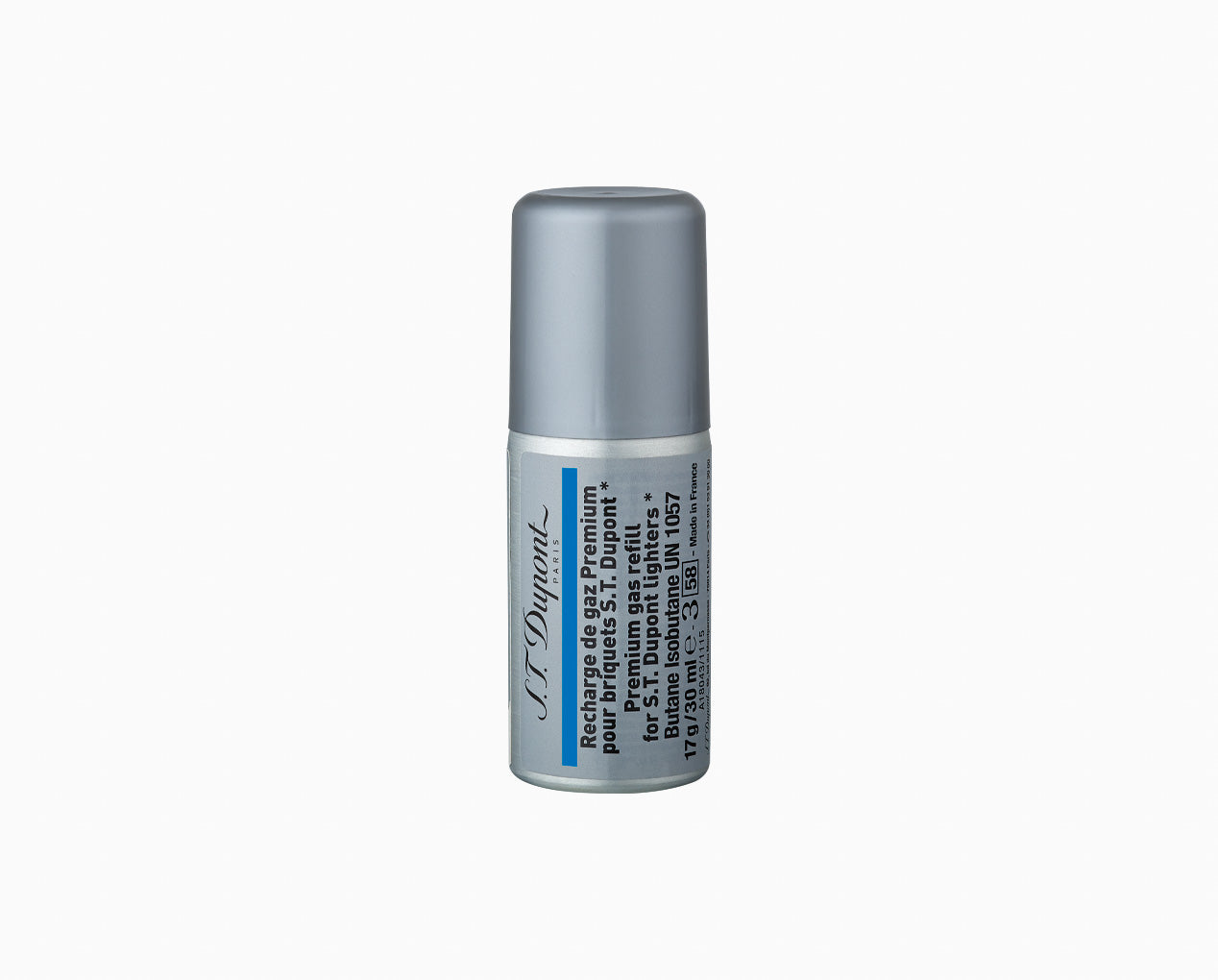
Refill photography courtesy of S.T. Dupont.
A collector’s identification method
How to find the correct refill without guessing
Think like a watch collector ordering a crown or gasket: the family name narrows the search, but the reference confirms the part. A genuine lighter can survive decades of ownership and may have changed hands without its original gas canister. An old seller’s note, a color memory or the shape of an adapter is not as persuasive as the lighter’s own identifying information.
Read the model reference
Inspect the base and original paperwork for a reference such as 016XXX, C16XXX or 017XXX. Preserve photographs of those markings for your collection records.
Match the exact family
Check the current manufacturer product or refill listing. For a KingZendo purchase, compare the reference shown on the product page in the S.T. Dupont collection.
Stop if the fit feels wrong
The correct connection should engage cleanly. Do not force a nozzle, improvise an adapter or continue while gas sprays around the valve.
For discontinued or vintage pieces, the cap or valve-area color may offer a supporting clue, but age, replacement parts and prior service can complicate the picture. Consult a qualified dealer or S.T. Dupont service channel if the engraved reference is hard to read. This small pause protects the filling valve and is far less costly than diagnosing a damaged seal later.
Precision over convenience
Why the correct gas canister matters
All of these products may contain butane, but a refill is more than its fuel. The canister’s nozzle and mating geometry must work with the lighter’s valve. A mismatch can release cold liquid gas around the base instead of transferring it into the reservoir, stress the valve or create the impression that a sound lighter has a leak.
Using the specified S.T. Dupont refill also simplifies troubleshooting. If a lighter still produces a weak or irregular flame after the correct fuel has been installed, the owner can look next at flame adjustment, ignition or service rather than wondering whether a universal adapter sealed properly.
For collectors, mechanical sympathy is part of provenance. A pristine lacquer panel is easy to admire; a healthy filling system is what makes the object usable. Keep the receipt or photograph of the refill reference with the lighter’s box and papers. The next custodian will know exactly what was used.
Explore the difference between heritage soft-flame pieces in Ligne 1 and Ligne 2, dual-flame Le Grand models, and modern torch designs in the wider luxury lighter collection.
Modern families, practical choices
Gas guidance by S.T. Dupont collection
Jet lighters: often black, never assumed
The official black refill listing names MaxiJet, MiniJet, Slim 7 and Ligne 2 Torch. Current individual listings also place contemporary torch designs within the black-refill ecosystem. That makes black a familiar purchase for owners browsing the Slimmy, Biggy, Slim 7, MaxiJet or MiniJet ranges. For newer Twiggy designs, confirm the individual reference before checkout.
Soft flame and dual flame: reference-sensitive
Traditional construction does not collapse into a single gas color. The Ligne 2 collection spans yellow, red, green and black refill groups depending on version. The Ligne 1 collection distinguishes small and large models. Le Grand is currently listed with the red refill. The lesson is pleasingly simple: choose the lighter for its flame and ritual; choose the gas by its reference.
The universal-can question
Can you use regular butane in an S.T. Dupont lighter?
A generic butane can may contain the same broad fuel type, but “butane” alone does not guarantee the correct nozzle, pressure delivery or seal. Multi-tip adapter kits also introduce another variable at the most delicate connection on the lighter. For a valuable S.T. Dupont, the sensible recommendation is to use the dedicated manufacturer refill identified for the model.
This is not merely a luxury-brand ritual. It is a fit-and-function decision. The saving on a universal can is small beside the cost of a valve service, and escaping gas is a safety warning rather than a nuisance to work around. If the correct refill is unavailable, wait. Do not trim a plastic tip, stack adapters or force a nearly fitting nozzle.
A safe five-second procedure
How to refill once you have the correct gas
S.T. Dupont’s public care guidance is concise: keep the lighter and gas away from children, never store the refill above 50°C, work in a ventilated area, secure the refill to the valve, invert the equipment, then press and gently hold the canister for five seconds. The following checklist turns that direction into a calm bench routine.
- Prepare a safe space. Work away from flames, sparks, hot surfaces and smoking materials. Let the lighter cool completely and use good ventilation.
- Verify the reference one final time. Compare the canister code with the lighter’s model documentation. Remove the filling-valve cover as the model’s instructions describe.
- Make a straight connection. Seat the correct refill securely against the valve without tilting or forcing it.
- Turn the lighter and refill upside down. Keeping the assembly inverted supports the intended fuel transfer.
- Press gently for five seconds. Release the canister, separate it carefully and replace the valve cover. Avoid skin contact with escaping liquid gas because rapid evaporation can cause a cold burn.
- Pause before ignition. If you smell strong gas or hear continued hissing, do not test the flame. Move away from ignition sources, ventilate the area and allow any released gas to dissipate.
For a more detailed walkthrough, see KingZendo’s companion guide, How Do You Refill an S.T. Dupont Lighter? A failed ignition after refilling does not automatically mean the lighter needs more gas; on a flint-ignition model, the flint may need attention, while a continuing leak or inconsistent valve behavior calls for professional inspection.
Buying and ownership notes
What new owners should expect
Luxury lighters are commonly sold without gas because pressurized fuel is regulated in transport. An empty lighter is therefore not evidence of a fault. Plan to obtain the correct refill locally or through a seller able to ship it lawfully to your destination. Availability and delivery rules can differ by region.
When choosing a new piece, record both the lighter reference and the refill code at purchase. KingZendo’s categories make it easy to compare Ligne 2, Le Grand, Biggy, Slimmy and Twiggy designs. Add a cigar case or cigar cutter only after the lighter and its maintenance essentials are settled.
The best collector habit is a small one: place a card in the presentation box stating the refill color, reference number and date last filled. It prevents guesswork months later and gives a future owner a clean, useful service history.
The KingZendo verdict
Buy the lighter by passion. Buy the gas by reference.
Every S.T. Dupont gas lighter uses butane, but the correct refill is model-specific. Confirm the engraved or documented reference, match it to the official color code, and never force a universal fitting. That disciplined minute preserves the performance—and the pleasure—of a precision object made to accompany years of ritual.
Shop S.T. Dupont Lighters Explore Luxury LightersFrequently asked questions
S.T. Dupont gas refill FAQ
What type of gas does an S.T. Dupont lighter use?
S.T. Dupont gas lighters use pressurized butane. They do not use liquid naphtha-style lighter fluid. The butane canister must also have the color code and valve format specified for the exact lighter model.
Do all S.T. Dupont lighters use the same gas refill?
No. S.T. Dupont uses several color-coded refill families, including black, red, yellow, green and blue, plus dedicated refills for models such as Défi Extrême and Hooked. Check the lighter’s reference rather than choosing by appearance.
What models use black S.T. Dupont gas?
The official black 900430 listing names Liberté, Ligne 2 Torch, MiniJet, MaxiJet, Slim 7, The Wand, keychain and miniature chain lighters. Current individual product listings should be checked for newer models.
What is the difference between red and yellow S.T. Dupont gas?
They are intended for different lighter families and valve applications. Red 900435 is listed for Le Grand, C16XXX Ligne 2 Cling, 017XXX Ligne 2 Slim and Ligne 1 large models, among others. Yellow 900432 is listed for Ligne 1 small models and 016XXX Ligne 2 models, among others.
Can I use regular butane in an S.T. Dupont lighter?
Generic butane is not recommended for a valuable S.T. Dupont because fuel type alone does not confirm nozzle and valve compatibility. Use the dedicated S.T. Dupont refill specified for the exact model and do not force a universal adapter.
How can I find my S.T. Dupont lighter’s reference number?
Inspect the base of the lighter and its original box, warranty card or instruction booklet. Compare that number with the current manufacturer product page or ask a qualified S.T. Dupont dealer if the marking is unclear.
How long should I press the S.T. Dupont refill can?
S.T. Dupont’s published care guidance says to secure the refill to the valve, invert the equipment, then press and gently hold the container for five seconds.
Why is my S.T. Dupont lighter leaking during refilling?
Gas escaping around the connection can indicate a mismatched nozzle, a tilted or incomplete seal, or a valve that needs service. Stop refilling, move away from ignition sources, ventilate the area and verify the refill reference. Do not force the connection.
Safety note: Butane is extremely flammable. Follow the instructions supplied with your lighter and refill, keep both away from children and heat, and use professional service if a valve leaks or appears damaged.