
The KingZendo Collector’s Workshop
How to Replace the Flint in an S.T. Dupont Lighter
A quiet wheel, a weak shower of sparks and one tiny piece of flint: this is precision maintenance at its simplest—provided you identify the mechanism before opening it.

The careful answer
First confirm that your lighter actually uses a flint.
Replacing an S.T. Dupont flint is usually a short job: open the correct retaining system, remove the worn flint, insert one compatible replacement and secure the mechanism again. The difficult part is not the tiny stone. It is recognizing whether the lighter has a classic sliding flint rail, a screw-retained system such as a current Le Grand, or a piezo ignition mechanism that has no user-replaceable flint.
That distinction matters. Traditional Ligne 1 and Ligne 2 models appear on S.T. Dupont’s black-flint compatibility list. Current Le Grand product pages identify a compatible flint and note that a screwdriver is supplied for owner replacement. By contrast, some modern torch families use piezo ignition and should not be dismantled in search of a flint.
Compatibility before technique
Which S.T. Dupont flint does your lighter need?
S.T. Dupont uses color-coded flint packs. The color refers to compatibility—not the lighter’s lacquer, metal finish, gas refill or flame. Always confirm the exact model reference and the current local packaging.
| Ignition item | Models listed by S.T. Dupont | Typical access | What the owner should do |
|---|---|---|---|
| Black flint | Ligne 1, Ligne 2, small Ligne 2, Gatsby, Urban, Soubreny, Jéroboam, cylindrical and long table lighters. | Often a sliding rail or model-specific holder near the ignition wheel. | Use the black S.T. Dupont pack specified for the exact reference. |
| Red flint | Ligne Initial, Le Grand S.T. Dupont, Ligne 8, Ligne D, Mon Dupont and Liberté on the current red-flint listing. | Varies; current Le Grand models use a screw-retained arrangement and include a screwdriver. | Follow the model booklet and control the spring while opening the holder. |
| Blue flint | D-Light in S.T. Dupont’s current general compatibility guide. | Model-specific. | Confirm against the original instructions before opening. |
| No listed flint | Piezo-ignition and electronic-spark designs; exact construction varies by collection. | No user flint chamber. | Do not dismantle. If there is no spark, use an authorized service route. |


Flint photography courtesy of S.T. Dupont.
Diagnose before replacing
How to tell when the flint is worn out
Fewer visible sparks
The wheel turns normally but produces only an occasional, weak spark. This is the classic sign that the flint has become too short to meet the wheel consistently.
A loose-feeling wheel
The wheel spins with unusually little resistance. The remaining flint may be exhausted, or the spring may no longer be pressing it firmly against the wheel.
Gas without ignition
You can hear or smell a brief gas release but see no spark. Stop repeated attempts, ventilate the area and inspect the ignition only when it is safe.
A low fuel level and a worn flint can feel similar because both produce a lighter that does not ignite. Observe the spark before assuming. If the lighter makes a healthy spark but no flame, the issue is more likely fuel, adjustment or service. If it produces no spark, flint condition becomes a sensible next check—provided the model uses a flint at all.
A jeweler’s approach
Prepare the lighter and the work surface
A luxury lighter deserves a controlled surface, not a crowded kitchen counter. Lay down a pale microfiber cloth or shallow parts tray so a dark flint, spring or screw cannot roll away. Wash and dry your hands, remove rings that could mark lacquer, and work in bright light away from flames, heat and smoking materials.
- The exact S.T. Dupont flint specified for the model
- The original model booklet or current product listing
- A clean microfiber cloth and shallow parts tray
- The supplied screwdriver only when the model is designed for it
- Optional non-marring tweezers for lifting a loose, visible flint
Method one
Replacing a flint in a classic Ligne-style sliding system
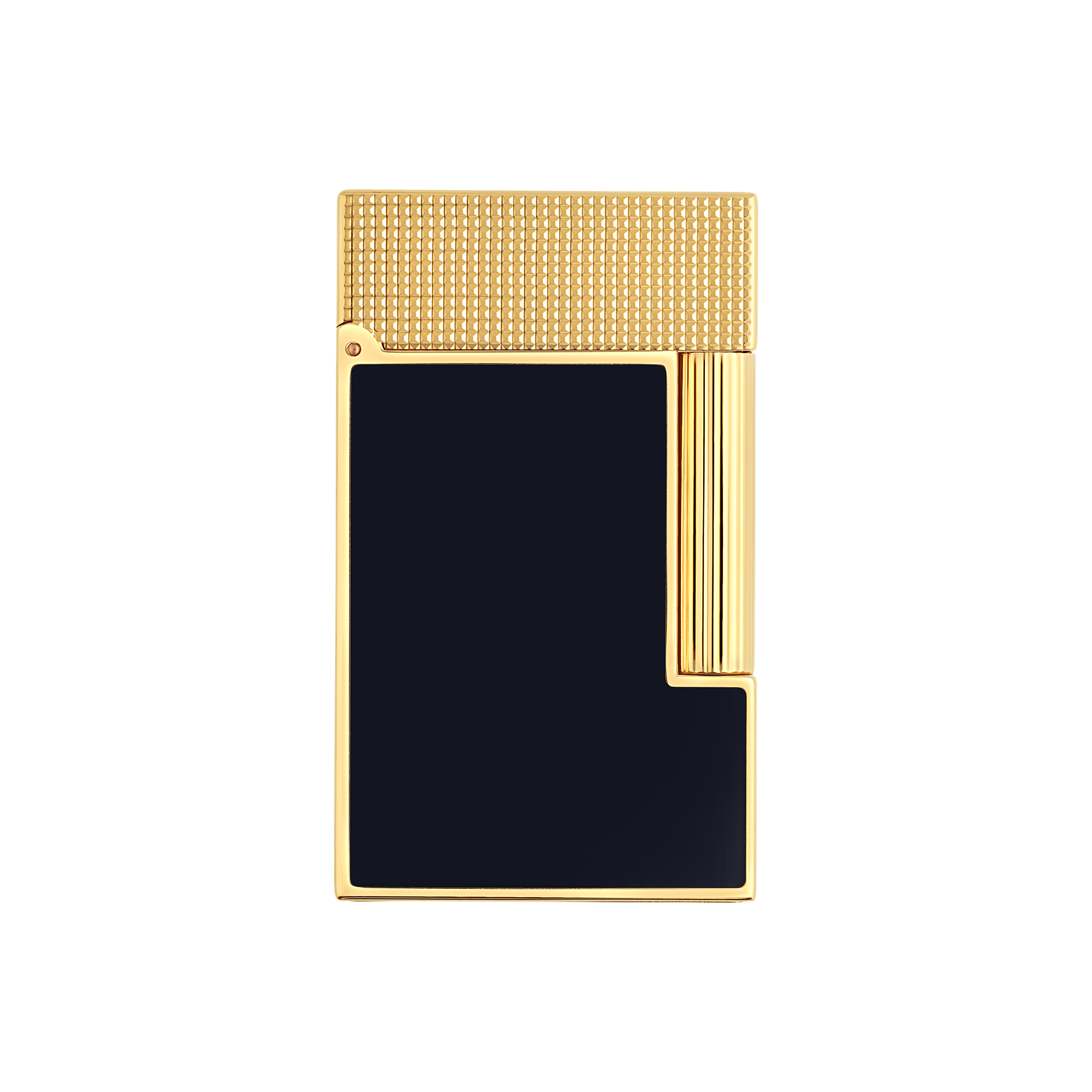
Many classic Ligne mechanisms place the flint beside the spark wheel beneath a spring-loaded sliding rail. Details vary between generations and sizes, so the release button or rail may not look identical on every example. These steps describe the careful sequence—not permission to force a part that does not move as expected.
- Open the lid without turning the ignition wheel. Hold the lighter securely above the cloth with the mechanism facing upward.
- Locate the flint-rail release. On many Ligne-style mechanisms, a small side control releases spring pressure so the rail can slide back.
- Control the moving parts. Keep a fingertip over the rail and wheel area while sliding the holder open. The wheel or spring-loaded part may become loose when pressure is released.
- Remove the old flint. Lift out the worn piece. If only dust remains, tap gently over the tray; never scrape the tube with a steel pin.
- Insert one correct flint. Place a single compatible stone in the chamber. It should settle freely without trimming, crushing or force.
- Return the rail to its locked position. Compress the mechanism smoothly and slide it home until it is secure. Do not let it snap against the finish.
- Check the wheel’s feel. It should rotate with controlled resistance. Test the lighter only after full reassembly, away from your face and all flammable material.
Method two
Replacing the flint in a current Le Grand system

Current Le Grand product pages state that a screwdriver is included so the owner can change the flint. That does not mean every visible screw is a maintenance point. Use only the screw identified in the supplied instructions, and use the supplied driver because its blade is matched more closely to the hardware.
- Place the lighter on the padded tray. Read the model-specific diagram and identify the flint-retaining screw—not a decorative or structural fastener.
- Loosen the holder slowly. Keep gentle downward control as the screw releases; a spring may sit behind the flint and can escape if the assembly is opened carelessly.
- Remove the worn flint and loose dust. Preserve the spring and screw in the tray. Do not add oil to the flint tube or spark wheel.
- Insert the specified replacement. Current Le Grand listings commonly identify a red flint, but the exact product reference must take precedence.
- Reinstall the spring and screw. Tighten only until secure. Over-tightening a small precision screw risks damaging its slot or threads.
If the supplied tool does not fit cleanly, the screw is already damaged, or the spring arrangement is unclear, stop. A professional can complete a simple service without turning a minor maintenance item into a scarred screw head on an otherwise pristine collector piece.
What preserves value
Seven flint-changing mistakes to avoid
Forcing the wrong size
A universal flint may be too wide, too hard or inconsistent for the tube and wheel. Do not file or crush one to make it fit.
Choosing by lighter color
A red lacquer lighter can require black flint; a blue Le Grand can require red. Compatibility color is unrelated to the finish.
Opening a piezo lighter
No visible flint chamber is not an invitation to disassemble the case. Confirm the ignition type before touching any fastener.
Losing spring control
Open a loaded rail or screw slowly over a tray. A missing spring can make a new flint appear defective because it never reaches the wheel.
Oiling the ignition wheel
Lubricant can contaminate the flint surface and attract abrasive debris. Keep the wheel and flint tube clean and dry.
Testing before reassembly
A loose wheel, open holder or exposed spring should not be operated. Complete the mechanism first, then test safely.
Over-tightening a screw
Small threads need restraint. Tighten until seated and secure, never until the driver twists or the slot begins to mark.
Ignoring an active gas smell
A continuing odor or hiss is a fuel-system issue. Stop, ventilate and keep away from every source of ignition.
After the replacement
Troubleshooting a lighter that still will not spark
| Symptom | Likely explanation | Collector-safe response |
|---|---|---|
| Wheel spins very freely | Flint is not seated, wrong flint size, or spring pressure is missing. | Reopen over the tray and confirm one flint plus the original spring orientation. |
| Wheel is locked | Flint is jammed, oversized or inserted into a dirty tube. | Do not force it. Remove the flint and seek service if it will not exit freely. |
| Strong spark, no flame | The flint is working; fuel level, refill compatibility or flame adjustment may be the issue. | Consult KingZendo’s S.T. Dupont refill guide. |
| Intermittent weak spark | Flint may not have settled, or the wheel may be dirty or worn. | Operate gently a few times after reassembly; if the pattern remains weak, arrange service. |
| Continuing gas odor | Possible valve or fuel-system leak unrelated to the flint. | Stop using the lighter, ventilate the area and obtain professional inspection. |
Small part, long ownership
Flint replacement as collector care
A flint costs very little, yet changing it thoughtfully protects mechanisms that may be admired for generations. Keep the opened packet with the lighter’s box, write the compatible color and local reference on a small archival card, and note the replacement date. This is not formal service history, but it gives the next owner useful evidence of careful maintenance.
Do not leave a completely exhausted flint in the lighter for years. Residue can compact inside the tube, and an owner who repeatedly forces an empty wheel may wear the striking surface unnecessarily. At the same time, do not replace a working flint simply because the lighter has been stored. Condition, not the calendar, should guide the job.
KingZendo’s S.T. Dupont collection lets collectors compare classic Ligne 2 lighters, heritage Ligne 1 pieces, modern Le Grand models and torch-focused designs such as Biggy, Slimmy, Slim 7, MaxiJet, MiniJet and Twiggy. The ignition systems are part of what makes these collections distinct.
Complete the ritual with a fitted S.T. Dupont cigar case or precision cigar cutter, and browse the wider luxury lighter collection for other approaches to flame and craftsmanship.
The KingZendo verdict
The right flint should disappear into the ritual.
When the mechanism is identified, the compatible flint is selected and every spring or screw is handled with restraint, replacement takes only minutes. The reward is not merely a spark—it is the return of that familiar, deliberate ignition that makes a fine S.T. Dupont feel complete.
Shop S.T. Dupont Lighters Explore Luxury LightersFrequently asked questions
S.T. Dupont flint replacement FAQ
How do I know whether my S.T. Dupont lighter uses a flint?
Check the model reference, original booklet and current manufacturer product page. Traditional Ligne models and specified Le Grand models use replaceable flints, while piezo-ignition designs do not have a normal user-replaceable flint.
Which flint color does an S.T. Dupont Ligne 2 use?
S.T. Dupont’s current compatibility guidance lists Ligne 2 models with black flints. Confirm the exact reference and local pack label because product-number formatting can differ by region and model generation.
What flint does an S.T. Dupont Le Grand use?
Current standard Le Grand product pages commonly specify a red flint and provide a screwdriver for replacement. Limited editions can differ, so the exact lighter’s product page or booklet must take precedence.
Can I use a universal lighter flint in an S.T. Dupont?
It is safer to use the S.T. Dupont flint specified for the model. A universal flint can have the wrong diameter, length or hardness and may jam the tube or produce poor wheel contact.
Do S.T. Dupont torch lighters have replaceable flints?
Many torch models use piezo ignition rather than a traditional replaceable flint, but construction varies. If the official product information does not list a flint, do not dismantle the lighter to look for one.
Why does the spark wheel spin after I install a new flint?
A freely spinning wheel often means the flint is not seated against it, the spring is missing or incorrectly positioned, or the replacement is the wrong size. Reopen the holder over a tray and verify the original arrangement without forcing the wheel.
Should I empty the gas before changing an S.T. Dupont flint?
Routine flint replacement does not require deliberately venting the gas. Work away from heat and ignition sources, avoid operating the gas valve and stop if you notice a continuing gas odor or hiss.
When should an S.T. Dupont lighter go to professional service?
Seek professional service if the wheel or flint is jammed, a screw is damaged, the spring arrangement is unclear, the lighter uses piezo ignition, or gas continues to leak. Do not force precision parts or open the fuel system.
Safety note: Butane is extremely flammable. Work away from flames, sparks and heat; follow the instructions supplied with the exact lighter; and obtain qualified service for leaks, damaged valves or uncertain mechanisms.