
KingZendo Journal · Collector Guide
How to Buy a Vintage S.T. Dupont Lighter: A Collector’s Checklist
Buy the reference and its condition—not the romance of an uncertain listing.
Learning how to buy a vintage S.T. Dupont lighter begins with definition. Sellers use “vintage,” “discontinued,” and “rare” loosely. Decide whether you want a Ligne 1, Ligne 2, finish, production period, or limited edition, then research its dimensions, flame system, refill, flint, markings, and presentation materials.
Read the Condition Grade Carefully
| Practical Grade | What It Usually Means | Best For |
|---|---|---|
| Mint / Collector | Minimal evidence of use; originality and completeness matter | Display-focused collections |
| Excellent / Serviced | Light honest wear; operation tested; service disclosed | Best balance for most buyers |
| User Grade | Visible plating wear, scratches, or small lacquer flaws; functional | Regular carry at a sensible price |
| Project / Untested | Unknown fuel retention or ignition; missing or damaged parts possible | Experienced restorers only |
Condition labels are not universal standards. Treat the photographs and written disclosures—not the headline grade—as the evidence.
The Collector’s Inspection Checklist
- Research the reference: compare the claimed era, finish, dimensions, flame, roller or trigger, refill code, and known catalog details.
- Evaluate the seller: look for specialist knowledge, clear return terms, independent feedback, and direct answers rather than vague assurances.
- Request complete photographs: obtain every face, base markings, lacquer edges, cap interior, hinge, burner, roller, adjustment, and refill valve.
- Inspect condition: distinguish honest patina from dents, deep plating loss, lacquer chips, corrosion, loose hinge play, and aggressive polishing.
- Demand a functional account: ask about spark, flame stability, adjustment, fuel retention, leaks, recent seals, replacement parts, and service invoices.
- Authenticate through consistency: construction, weight, markings, mechanism, finish, reference details, and provenance should agree. No serial number or “Cling” proves authenticity alone.
- Assess completeness: matching box, papers, receipt, certificate, and accessories add context, but they can be separated or reproduced.
- Calculate total cost: include inspection, repair, missing refill adapter, shipping, insurance, taxes, and a protective case.
Strong Buying Signals
Prior service from a recognized specialist, sharp close-ups, a video of operation, consistent wear, a clear reference, and a seller who explains imperfections are all reassuring. For newer transitional pieces, an official Digital Passport or certificate may support provenance when correctly connected to the item and proof of purchase.
Red Flags
Be cautious with stock photos, hidden base markings, “recently serviced” without records, fresh plating described as original, strong fuel odor, excessive hinge movement, mismatched parts, or pressure to avoid protected payment. Walk away when the seller refuses reasonable inspection requests.
Current Collector-Style Alternatives
These KingZendo listings are current products with classic Ligne 2 character; they are presented as lower-risk alternatives, not described here as vintage pieces.
Blue Lacquer & Gold
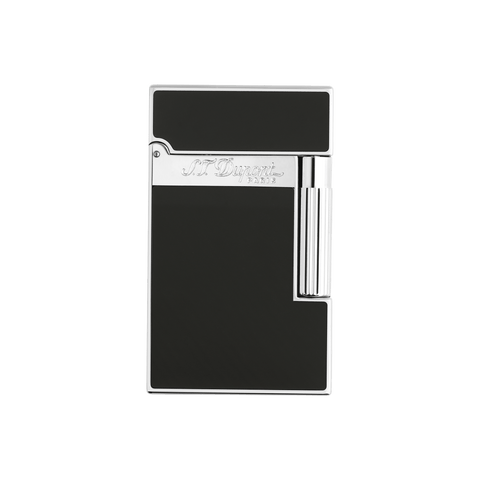
View Ligne 2 16381 →Black Lacquer & Palladium
View Ligne 2 16380 →Silver Diamond Head
View Ligne 2 16184 →Frequently Asked Questions
Is every older S.T. Dupont lighter considered vintage?
No. “Vintage” has no single marketplace definition. Confirm the actual reference, production period, and whether the lighter is merely discontinued or genuinely older.
Can a serial number prove a vintage lighter is authentic?
No. A serial number is only one detail. Authenticity should be assessed through construction, markings, dimensions, mechanism, finish, provenance, and expert inspection together.
What condition is best for a first vintage lighter?
A tested, serviced example in excellent condition usually offers the best balance of originality, usability, appearance, and manageable ownership risk.
Are the original box and papers necessary?
No, but correct period packaging and documents can add context and collector appeal. They should support the lighter, not substitute for inspecting it.
Can S.T. Dupont repair every vintage lighter?
No. Many older lighters remain serviceable, but S.T. Dupont warns that parts for models more than ten years old may no longer be available.
Should I buy an untested vintage S.T. Dupont lighter?
Only if the price assumes it may need major service and you have access to a qualified repairer. Untested should never be interpreted as working.
Guidance basis: current S.T. Dupont after-sales, certificate, Digital Passport, product-care, and heritage information. Authentication and serviceability require item-specific assessment.
Collect with Evidence, Not Guesswork
Compare classic Ligne 2 designs and use their documented specifications as a reference point for your collection.
Explore S.T. Dupont Ligne 2