
The KingZendo Collector’s Workshop
Why Is My S.T. Dupont Lighter Not Working?
A no-light moment is not a diagnosis. Listen, look and separate fuel from spark—the lighter will usually tell you which system needs attention.
Begin with the symptom
Most failures begin with fuel, spark or flow.
An S.T. Dupont lighter that will not work is often empty, incompletely filled, fitted with the wrong gas refill or using a worn flint. A healthy spark with no flame points toward the fuel side; gas release with no spark points toward the ignition side. A weak, irregular or short-lived flame suggests flow, adjustment, temperature or an internal component that needs professional attention.
The model matters. A classic Ligne 2 soft-flame lighter, dual-ignition Le Grand and piezo torch such as a MaxiJet do not share one ignition architecture. Diagnose what the lighter actually does instead of applying the same internet fix to every collection.
The symptom matrix
What your S.T. Dupont lighter is telling you
Use one deliberate ignition attempt in a safe area and observe the result. Repeatedly clicking a lighter that is releasing unburned gas is neither useful nor safe.
| Symptom | Most likely area | First safe check | Decision |
|---|---|---|---|
| No spark and no flame | Worn flint, incorrectly seated flint, piezo ignition fault or blocked mechanism. | Confirm whether the model uses a replaceable flint; inspect only the designated flint holder. | Check ignition |
| Spark is visible, but no flame | Empty reservoir, incomplete refill, incorrect refill connection or fuel-flow issue. | Verify the refill code and repeat the manufacturer’s inverted five-second filling method. | Check fuel |
| Flame appears, then dies | Low fuel, very low adjustment, temperature effect, restricted flow or regulator issue. | Allow the lighter to reach normal room conditions, confirm fuel and inspect the external burner area. | Check flow |
| Weak or uneven torch flame | Low fuel, unsuitable conditions, contamination near the burner or internal jet/regulator fault. | Use the correct refill, let the lighter settle and clean only visible exterior surfaces gently. | Check conditions |
| Ignition wheel is jammed | Incorrect or stuck flint, compacted residue, displaced spring or mechanical damage. | Do not force the wheel. Open only the user-serviceable flint holder if the model instructions permit. | Service if stuck |
| Continuing hiss or strong gas odor | Fuel leak, valve or seal problem, or an unsealed refill connection. | Do not ignite. Move away from heat and sparks, ventilate the area and arrange professional inspection. | Stop using |
A five-minute triage
Troubleshoot in the right order
- Make the area safe. Work in ventilation, away from candles, cigarettes, cooking flames, sparks and hot surfaces. Let the lighter cool before handling or refilling.
- Identify the exact model and reference. Determine whether it is a soft-flame Ligne model, a dual-flame Le Grand or a piezo torch. Find the reference on the lighter and its original documents.
- Check fuel compatibility and transfer. Use the S.T. Dupont refill specified for that exact model. Secure the refill to the valve, invert the equipment and gently press for five seconds.
- Observe the ignition. A visible spark shifts attention toward fuel and flow. No spark shifts attention toward a replaceable flint or a piezo/electronic ignition fault.
- Inspect only what is user-serviceable. Replace the correct flint where the model provides a flint holder; wipe visible surfaces with a soft cloth. Do not open the gas system.
- Know when to stop. A jammed wheel, damaged screw, repeated piezo failure, continuing leak or internal regulator problem belongs with an experienced service center.
Cause one
The lighter is empty—or the gas never transferred

S.T. Dupont gas lighters use butane, but the refill interface varies by collection and reference. A canister can contain butane and still fail to seal correctly against a particular valve. When the connection does not match, fuel may escape around the base instead of entering the reservoir.
Do not choose the refill by lacquer color or flame color. The black, red, yellow, green, blue and dedicated model codes describe compatibility. For example, the official listings separate 016XXX Ligne 2 models from C16XXX and 017XXX versions. The safest process is to match the exact lighter reference to the current refill listing.
S.T. Dupont’s published procedure says to work in a ventilated area, secure the refill to the valve, turn the equipment upside down, then press and gently hold the canister for five seconds. If fuel sprays around the connection, stop. Do not compensate by pushing harder or modifying an adapter.
For a complete model chart, use KingZendo’s guide to S.T. Dupont lighter gas, then follow How Do You Refill an S.T. Dupont Lighter?
Cause two
The lighter has fuel but cannot make a reliable spark

On a flint-ignition lighter, the stone becomes shorter with use until spring pressure can no longer hold it firmly against the wheel. The wheel may feel unusually free, sparks become intermittent, or ignition disappears. S.T. Dupont specifically advises checking the flint when refilling does not restore ignition.
Flints are color-coded by compatible family. The official general guide assigns black to Ligne 1, Ligne 2, small Ligne 2, Gatsby, Soubreny, Urban and several table lighters; red to Liberté, Ligne 8, Ligne D and Mon Dupont; and blue to D-Light. Current Le Grand product pages also identify a compatible flint, with specifications varying by edition and market.
Never force the wheel. A wrong flint diameter, crushed flint, compacted dust or displaced spring can lock the mechanism. Use the exact replacement and the user-serviceable holder described in the original instructions. KingZendo’s companion article explains how to replace an S.T. Dupont flint without treating every model as identical.
Cause three
A piezo torch clicks but produces no spark
Many modern torch lighters use a piezoelectric ignition system rather than a conventional wheel and replaceable flint. A mechanical click without a visible spark can indicate an electrode alignment, insulation or internal ignition fault. This is not fixed by inserting a flint into the case, because there may be no flint chamber at all.
Owners browsing Slim 7, MaxiJet, MiniJet, Biggy, Slimmy and Twiggy collections should verify the ignition type on the individual listing. If the manufacturer does not identify a user-replaceable flint, avoid dismantling the lighter. Repeated piezo failure is a service issue.
Cause four
The flame is weak, uneven or will not stay lit
Fuel level and adjustment
A nearly empty reservoir can create a flame that appears briefly and fades. A very low adjustment may also look like failure. Use only the model’s normal adjustment control and remain within its intended range.
Temperature and conditions
Butane pressure changes with temperature. A lighter brought in from cold storage may need to return to ordinary room conditions before testing. Never heat it artificially or store a refill above 50°C.
Burner-area contamination
Lint, cigar fragments and pocket debris around the visible burner can disturb the flame. Wipe the exterior gently with a soft cloth. Keep liquids, solvent and metal needles away from the jet.
Internal regulator or valve fault
If correct fuel, normal conditions and a clean exterior do not restore performance, the regulator, valve or seals may require professional replacement and leak testing.
A soft flame that bends in a draft is behaving differently from a wind-resistant torch that loses pressure and becomes ragged. Compare like with like. A Ligne 1 or Ligne 2 is designed around the ceremony of a yellow soft flame. A Biggy or MaxiJet is judged by a concentrated torch. The expected flame is part of the diagnosis.
Cause five
One mode works, but the other does not
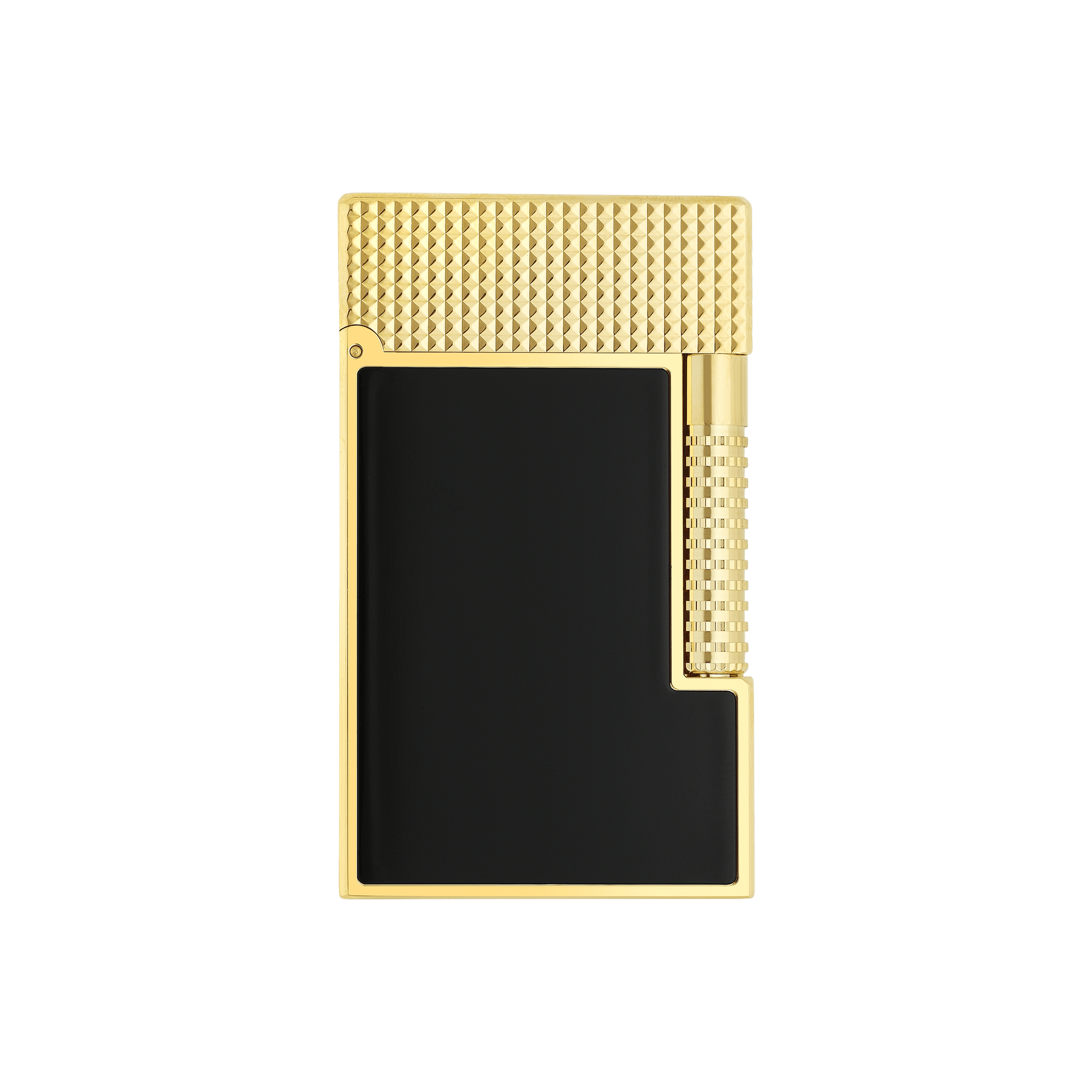
The Le Grand collection combines soft-flame and torch functions. If one flame mode operates normally while the other consistently fails, the shared reservoir is less likely to be completely empty. The symptom instead narrows attention toward the mode selector, its dedicated burner path or an internal component.
Do not insert a wire into either burner and do not remove decorative plates to reach the selector mechanism. Record which mode works, whether the ignition sparks in both positions and whether the failure changes as the lighter warms to room temperature. Those observations give a service technician useful evidence without risking the finish.
Current Le Grand product pages specify the compatible refill and flint, and some include a screwdriver for owner flint replacement. That screwdriver is not a general disassembly key. Use it only for the operation identified in the model instructions.
Protect the instrument
Repairs that create more problems than they solve


Do not probe the burner
A sewing needle or wire can alter a precision jet opening, damage an electrode or push debris farther into the system.
Do not improvise refill adapters
A nearly fitting nozzle can spill fuel and strain the valve. The correct model-specific refill is part of the mechanism.
Do not use solvent
S.T. Dupont advises cleaning lighter surfaces with a soft cloth and warns against solvent-based products. Lacquer and plated finishes deserve restraint.
Do not overfill repeatedly
If one correct filling attempt does not change the symptom, more gas is not automatically the answer. Return to the fuel-versus-spark diagnosis.
Do not force a jammed wheel
A crushed or oversized flint can lock the wheel. Force transfers the problem from a replaceable stone to the ignition mechanism.
Do not open the fuel system
Regulators, seals and valves require correct parts, pressure testing and leak checks. This is qualified service work.
When home checks end
When your S.T. Dupont needs professional service
S.T. Dupont’s after-sales description specifically includes restoring lighter operation, replacing functional parts such as regulators, valves and seals, cleaning visible surfaces, and checking appearance, leakage and function. That is the correct level of intervention when the problem lies beyond fuel choice or a normal flint change.
| Service trigger | Why it matters | What to document |
|---|---|---|
| Persistent gas leak | Requires seal, valve and pressure integrity checks. | Where the smell or hiss appears and whether it follows refilling. |
| Jammed ignition mechanism | Force may damage the wheel, spring, rail or surrounding finish. | Flint type used and whether the jam began after replacement. |
| Piezo click without spark | The electrode or internal ignition system may need repair. | Whether the fault is constant or intermittent. |
| One Le Grand flame mode fails | Mode-specific burner or selector components may be involved. | Which flame works, spark behavior and recent service history. |
| Correct fuel and spark, no stable flame | Regulator, valve or restricted internal flow may be responsible. | Refill reference, ambient conditions and flame behavior. |
Preserve the presentation box, warranty documents and purchase record. Photograph the lighter’s condition before service, including the base reference and every exterior panel. A collector is not merely sending away a tool; they are documenting custody of a crafted object.
A collector’s perspective
A silent lighter can still tell a useful story
There is a temptation to treat every failed ignition as an emergency. A collector learns the opposite. The lighter becomes most informative in the first quiet minute: does the wheel resist, is there a spark, does gas release, is the flame weak in both modes or only one? Those details make diagnosis elegant rather than frantic.
Keep a small card with the lighter’s model, gas color, flint color and maintenance dates. Store it beside the warranty booklet. For a newly acquired vintage piece, do not assume the seller used the correct refill or flint. Establish a clean baseline before judging the mechanism.
Explore KingZendo’s complete S.T. Dupont collection, compare classic Ligne 2 and Ligne 1 designs, or discover contemporary Le Grand, Biggy and Slimmy engineering. Complete the ritual with a fitted cigar case and precision cigar cutter.
The KingZendo verdict
Diagnose gently. Preserve deliberately.
A non-working S.T. Dupont is often asking for the correct fuel, a fresh flint or a calmer filling method. When the evidence points to leaks, regulators, piezo ignition or internal flow, professional service protects both function and collector value. The finest repair is the one that solves the actual fault without leaving a mark.
Shop S.T. Dupont Lighters Explore Luxury LightersFrequently asked questions
S.T. Dupont troubleshooting FAQ
Why is my S.T. Dupont lighter not lighting after a refill?
The gas may not have transferred because the refill does not match the valve, the connection was incomplete or the canister was not used in the correct inverted position. If fuel is present but there is no spark, inspect the specified flint or piezo ignition system instead.
How do I know if my S.T. Dupont flint is the problem?
A worn flint usually produces weak, intermittent or no sparks, and the ignition wheel may feel unusually free. Confirm that the model uses a replaceable flint, then install only the compatible S.T. Dupont color and size.
Why does my S.T. Dupont lighter spark but not produce a flame?
A visible spark with no flame points toward the fuel side: an empty reservoir, incorrect refill, incomplete fuel transfer, very low flame setting or an internal flow problem. Verify the model-specific refill before considering service.
Why is my S.T. Dupont torch flame weak or uneven?
Common causes include low fuel, cold conditions, an incorrect refill, exterior debris near the burner or an internal regulator or jet problem. Let the lighter reach normal room conditions and clean only visible surfaces with a soft cloth.
Can I use universal butane in an S.T. Dupont lighter?
Generic butane is not recommended for a valuable S.T. Dupont because the nozzle and valve connection must also match. Use the dedicated color-coded refill specified for the exact model and reference.
Should I clean an S.T. Dupont burner with a needle?
No. A needle or wire can damage a precision jet, alter its opening, disturb an electrode or push debris farther inside. Wipe visible exterior surfaces with a soft cloth and use qualified service for internal restrictions.
What should I do if my S.T. Dupont lighter leaks or hisses?
Do not ignite or continue testing it. Move the lighter away from heat, flame and sparks, ventilate the area and arrange professional inspection. A persistent leak can involve a valve, regulator or seal.
When should I send an S.T. Dupont lighter for professional service?
Use professional service for persistent leaks, jammed mechanisms, repeated piezo failure, damaged screws, unstable flame after correct fuel and ignition checks, or a Le Grand with one flame mode that consistently fails.
Safety note: Butane is extremely flammable. Work in ventilation away from children, flames, sparks and heat; never store refill canisters above 50°C; and use qualified service for leaks or internal faults.