How S.T. Dupont Lighters Are Made: Inside the Craftsmanship
Inside the Maison
How S.T. Dupont Lighters Are Made: Inside the Craftsmanship
Before the flame, there is metal shaped to precise proportions, texture cut into a surface, lacquer built layer by layer and a mechanism tested by sight, touch and—on the iconic Ligne 2—even sound.

Imagine the lighter before it gleams. There is no lacquer, no gold reflection and no famous note from the cap—only an idea translated into small pieces of metal that must eventually meet with extraordinary precision. The finished object will fit in a palm, yet it asks for skills associated with goldsmithing, mechanical assembly, decorative art and acoustic control.
That concentration of disciplines is what makes the making of an S.T. Dupont fascinating. The Maison combines modern production technology with craft traditions maintained in Faverges, Haute-Savoie. A Ligne 2 and a Slim 7 are not manufactured identically—their bodies, ignition systems and intended experiences are different—but both begin with the same demand: usefulness must be resolved with elegance.
The year S.T. Dupont moved its workshop from Paris to the family home in Faverges.
Documented steps associated with producing the body and cap to the Maison’s standards.
Possible lacquer layers on selected creations, each adding depth before final polishing.
Faverges: Where the Craft Took Root
S.T. Dupont began in 1872 as Simon Tissot Dupont’s Paris leatherwork shop. Trunks and travel cases required exact hinges, locks, frames and decorative hardware, creating a culture in which mechanical function and surface beauty belonged together. Simon’s sons, Lucien and André, moved the workshop to Faverges in 1924, near Lake Annecy.
The Maison added another defining skill in 1935 when Georges Novossiltzeff, its first master lacquerer, introduced Chinese lacquer to the workshop. In 1941, S.T. Dupont created its first luxury lighter. The lighter was therefore not a sudden change of identity. It was a smaller stage on which the house could apply what it already understood about portable luxury.
France recognized this combination of artisanal and industrial expertise in 2012, when S.T. Dupont received the Entreprise du Patrimoine Vivant—Living Heritage Company—label. For a collector, that recognition helps explain why the workshop story matters: the techniques are part of the value, not merely a decorative marketing theme.
From Bare Metal to Finished Flame
The exact sequence depends on the collection, finish and complication. A lacquered Ligne 2 with a hinged cap travels through a different path from a streamlined jet lighter. The following journey brings together the publicly documented practices that define S.T. Dupont craftsmanship without pretending that every reference receives every operation.
The Experience Is Designed Before the Surface
The first decisions concern proportion, flame type, fuel capacity, control placement and the relationship between body and cap. On a Ligne 2, balance and resonance belong to the brief. On Biggy, the broad torch and larger rectangular body must work together. On Slim 7, the challenge is fitting a wind-resistant torch into an exceptionally thin form.
Metal Becomes Architecture
Components are formed to create the structural shell that will carry the mechanism and finish. This is where consistent dimensions become essential: a cap must meet the body cleanly, openings must align and the exterior needs sufficient precision for later polishing, lacquer or patterned decoration. The Maison describes 140 individual steps in the production of body and cap for its prestige lighter craftsmanship.
Stamping, Engraving, Chiselling and Guilloché
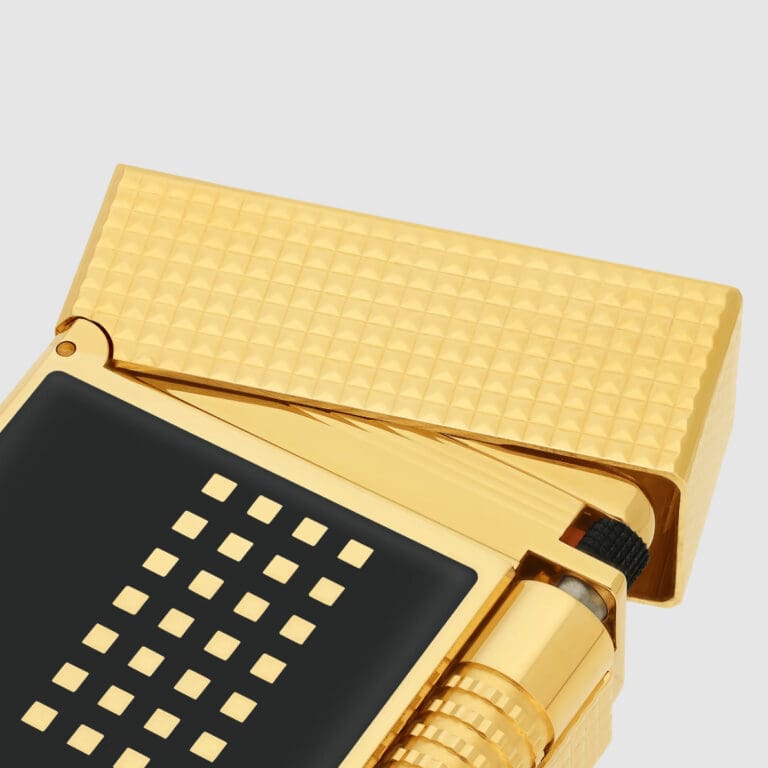
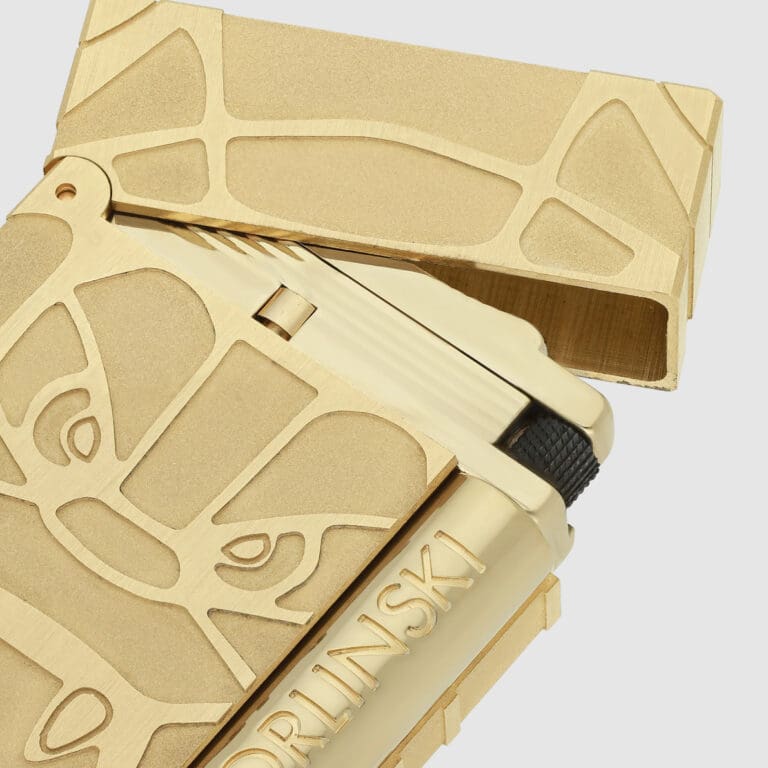
A plain surface can be stamped or engraved with a design; chiselling can sculpt detail; guilloché cuts or forms repeating geometric texture that catches light with controlled rhythm. S.T. Dupont combines hand techniques with contemporary digital methods, selecting the approach that suits the motif and production.
A Flawless Finish Begins Underneath
Lacquer and polished metal reveal rather than conceal poor preparation. Surfaces therefore need to be refined before decorative finishing. Edges, patterned areas and flat planes must read clearly, because every later reflection will make their quality visible.
Color Is Built Through Time
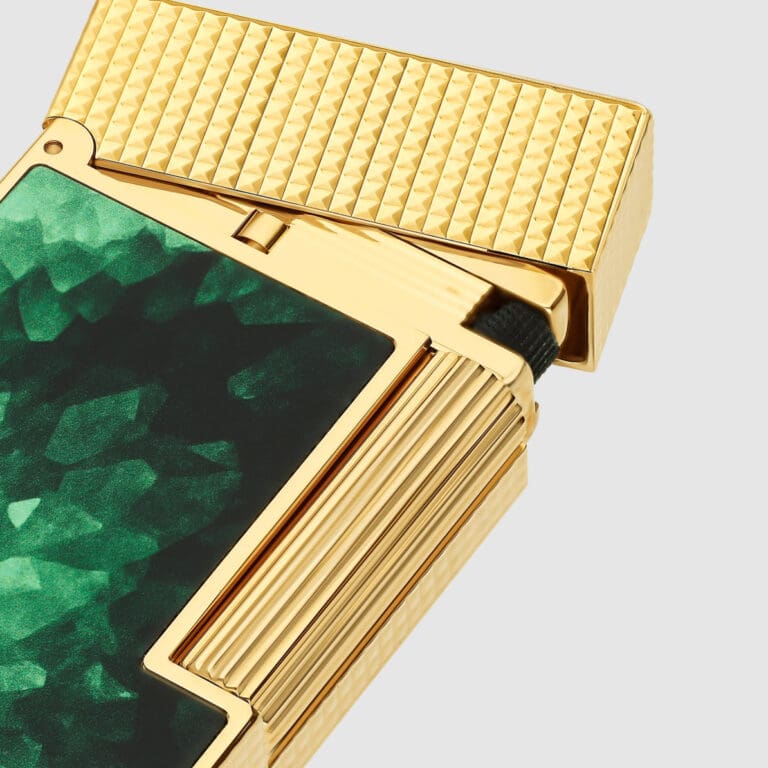
S.T. Dupont’s lacquer process involves selecting and developing resins, applying material, allowing it to dry and polishing the surface—then repeating the cycle. Some objects receive twenty or thirty layers. This accumulated depth produces the liquid appearance collectors recognize, especially when lacquer settles over guilloché and the pattern seems to move beneath the color.
Gold, Palladium and Polished Contrast
Depending on the reference, metal areas may appear in yellow-gold, rose-gold, palladium or other coordinated finishes. Polished appointments frame lacquer, while textured metal reduces reflection and emphasizes the geometry. The finishing plan is not an afterthought; it determines how the eye reads the lighter from cap to base.
The Decorative Object Becomes a Working Mechanism
The prepared body receives the parts that control fuel, ignition, flame and movement. Hinges, rollers, flint components and seals must cooperate without damaging the finished surfaces around them. Modern jet models introduce different internal demands, while Le Grand’s selected dual system must support both a soft flame and torch selection.
Function, Alignment and Sound Are Tested
Final control considers the lighter as a complete object: its mechanism, presentation, alignment and intended sensory signature. For applicable Ligne 2 lighters, S.T. Dupont describes a final acoustic check using a dedicated resonance controller. The piece is approved only when its tone meets the required standard.
Why the Pattern Appears to Move
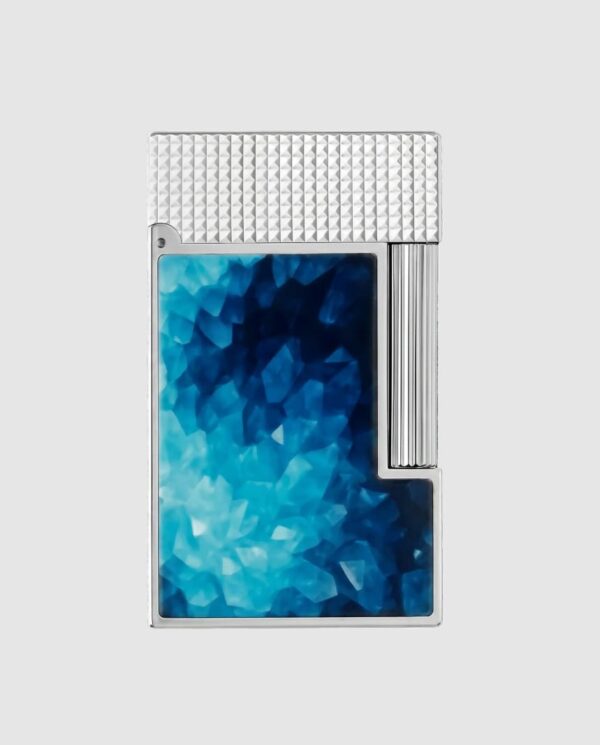
The Blue Geode Ligne 2 combines mineral-inspired lacquer with a micro diamond-head pattern. As the viewing angle changes, highlights travel across the geometry beneath the color. The effect shows why decoration is a sequence: metal texture must be resolved before translucent depth can magnify it.
The Crafts Behind the Surface
| Technique | What it does | What the collector notices | Typical expression |
|---|---|---|---|
| Stamping | Forms or impresses repeatable detail into metal | Crisp relief and consistent house motifs | Logos, patterned panels and structural forms |
| Engraving | Cuts lines, lettering or imagery into the surface | Sharp detail that changes under light | Collaborations, serial information and personalized motifs |
| Chiselling | Shapes relief through controlled tool work | Sculptural depth and expressive edges | Haute Création and intricate decorative pieces |
| Guilloché | Creates precise repeating geometry | Rhythmic reflections and tactile pattern | Diamond head, vertical lines and designs beneath lacquer |
| Lacquering | Builds color through repeated application and polishing | Depth, brilliance and subtle tonal variation | Classic lacquer, guilloché-under-lacquer and themed editions |
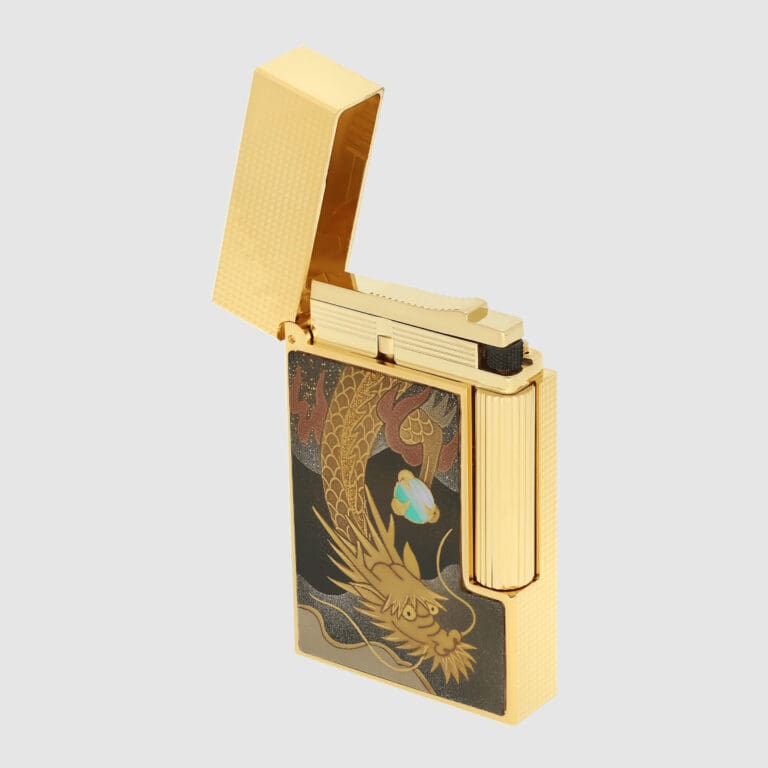
| Maki-e | Uses lacquer with precious metallic powders to form imagery | Pictorial decoration with luminous gold and silver detail | Limited Japanese-art editions such as the Dragon Ligne 2 |
| Resonance control | Evaluates the acoustic signature of the hinged cap | The clear Ligne 2 opening note | Applicable Ligne 2 and Perfect Ping references |
Lacquer: The Slowest Kind of Brilliance
Lacquer is often described as a color, but in S.T. Dupont collecting it is better understood as a material process. The Maison traces its practice to 1935. Its master lacquerers in Faverges work through repeated cycles of application, drying and polishing, controlling resin, pigment, environment and the behavior of the surface.
A single coat can cover metal; many carefully worked layers create visual depth. That distinction is why a lacquered lighter may seem almost illuminated from within. It is also why small variations can be attractive. Hand processes do not erase discipline, but they can leave subtle individuality in the way light travels through the finish.
Color Can Carry a Story
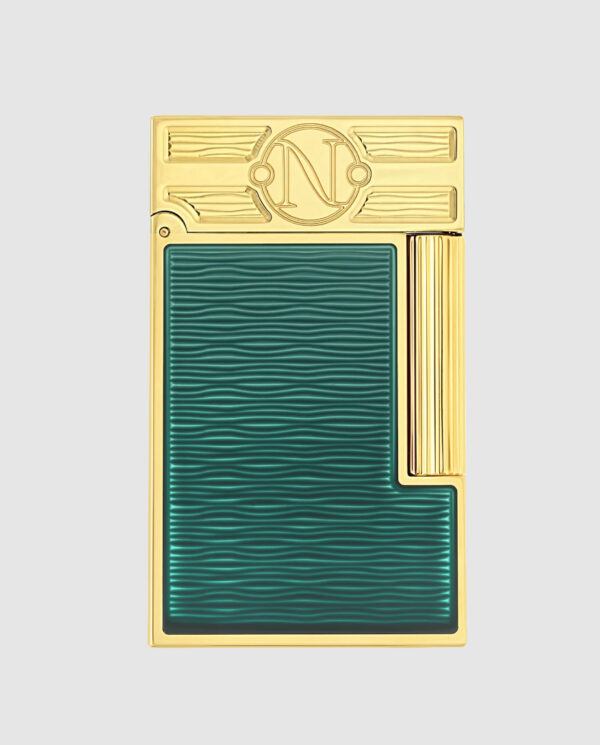
The Jules Verne Green Pacific edition translates an imagined underwater world into saturated lacquer and gold appointments. The technical finish becomes emotional when color, literature and object design align.

Guilloché Without Color
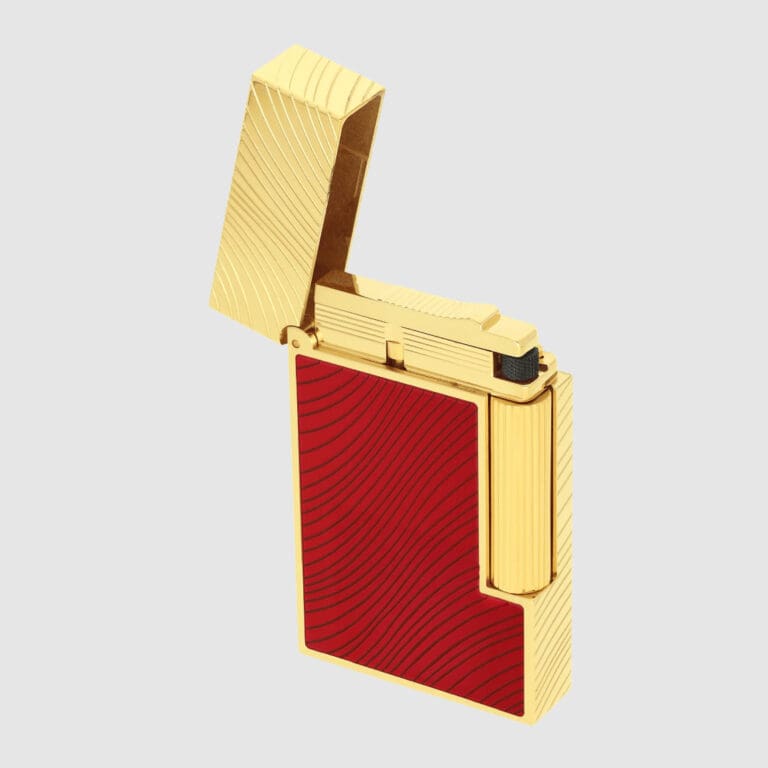
A gold-tone diamond-head surface demonstrates another approach: instead of placing lacquer over texture, the pattern itself controls reflection. The lighter changes character as each facet catches the room.
Why Modern Jet Lighters Still Belong to the Craft Story
It would be misleading to suggest that every S.T. Dupont follows the complete Ligne 2 journey. Biggy, Slimmy, Twiggy, MaxiJet and Slim 7 use different bodies and ignition architecture. They do not require a hinged cap to express quality.
Their craft challenge is integration: fitting torch performance, fuel storage and controls into a deliberate silhouette. Biggy supports an approximately two-centimetre flat torch in a Ligne 2-inspired rectangular body. Slimmy brings a wide flame into a form around nine millimetres thick on standard references. Slim 7 takes reduction further, fitting a wind-resistant torch into a body around seven millimetres.
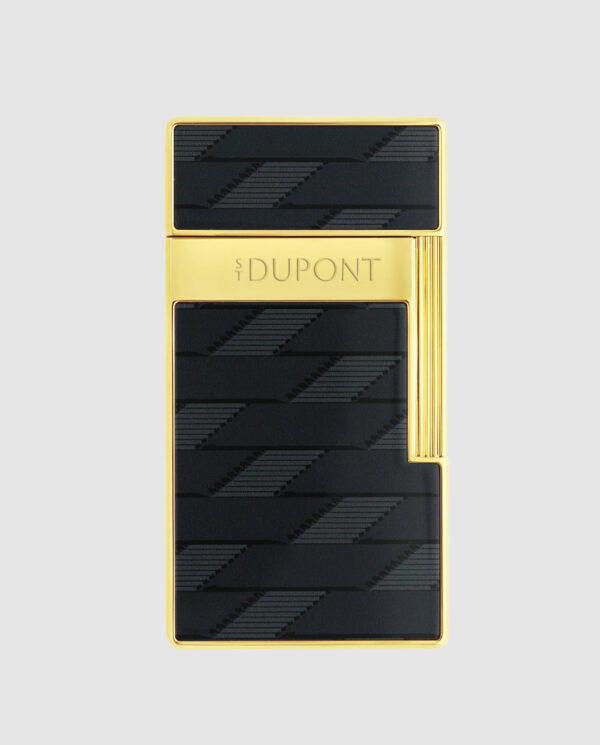
Heritage Codes, Modern Flame
The Monogram 1872 edition shows how lacquer, graphic pattern and polished appointments can dress a contemporary broad-torch platform without pretending it is a traditional soft-flame model.

Precision Expressed Through Thinness
Slim 7’s luxury is largely architectural. Its narrow body, flat torch and clean metal finish demonstrate that advanced packaging can be as meaningful a craft achievement as elaborate surface decoration.
What Collectors Should Look For
Understanding the production methods changes the way a lighter is examined. Instead of asking only whether the color is attractive, a collector can study how the surface was constructed and how it interacts with the mechanism.
Read the Reflections
Even highlights help reveal polishing quality. On guilloché, watch how the pattern shifts under movement; under lacquer, look for depth rather than a flat printed effect.
Notice the Transitions
Pay attention where cap meets body, where polished appointments frame lacquer and where controls enter the case. Luxury is often clearest at the boundaries between materials.
Judge the Correct Model
A Ligne 2 invites acoustic attention; a Slim 7 does not. Evaluate each lighter according to its intended design instead of expecting every collection to perform the same ritual.
Preserving the Artisan Finish
Craftsmanship does not make a lighter immune to careless use. Lacquer and polished appointments should be protected from keys, coins and abrasive cloths. Wipe handling marks gently with a clean soft cloth, follow the instructions for the exact reference and use only the specified fuel, adapter and flint.
- Store separately from hard or sharp pocket objects.
- Use the correct fuel system for the exact model and generation.
- Never force a cap or roller that feels obstructed.
- Choose professional service for leaks or mechanical faults.
- Keep the box and documentation as part of the collector set.
- Remember delivery rules: KingZendo ships premium lighters empty of fuel.
Frequently Asked Questions
Where are S.T. Dupont lighters made?
S.T. Dupont maintains its historic workshop in Faverges, Haute-Savoie, France. The Maison moved its Parisian workshop to the family home in Faverges in 1924, where its documented goldsmithing and lacquer traditions continue.
Are S.T. Dupont lighters handmade?
S.T. Dupont combines artisanal handwork with precision manufacturing and modern digital techniques. Depending on the reference, craftspeople may stamp, engrave, chisel, guilloché, lacquer, polish, assemble and inspect components through many controlled operations.
How many steps are required to make an S.T. Dupont lighter?
S.T. Dupont states that producing the body and cap of its prestige lighters can involve 140 individual steps. The exact process varies by collection, mechanism, finish and decorative technique, so not every model follows an identical sequence.
What is guilloché on an S.T. Dupont lighter?
Guilloché is a precise repeating geometric pattern formed or cut into metal. It creates rhythmic reflections and tactile detail, and it may remain visible as a metal finish or appear beneath translucent lacquer.
How is S.T. Dupont lacquer applied?
The Maison describes repeated cycles of lacquer application, drying and polishing under controlled conditions. Selected creations may receive twenty or thirty layers, producing the depth and brilliance associated with S.T. Dupont lacquer.
How is the S.T. Dupont Ligne 2 ping tested?
For applicable Ligne 2 pieces, S.T. Dupont describes a final tone check using a dedicated resonance controller in its Savoyard workshop. The lighter must meet the required acoustic standard before approval.
Does every S.T. Dupont lighter use the same manufacturing process?
No. A hinged-cap soft-flame Ligne 2, a dual-system Le Grand and a slim torch lighter have different components and production requirements. The shared qualities are disciplined design, controlled finishing and attention to the intended mechanism.
Why are handcrafted S.T. Dupont lighters collectible?
Collectors value the combination of mechanical design, metalwork, lacquer depth, recognizable forms and limited decorative editions. Complete presentation materials, documented references and well-preserved finishes add context to the craftsmanship.
Discover S.T. Dupont Craftsmanship at KingZendo
Explore guilloché metalwork, deep lacquer, Perfect Ping icons, modern premium jets and limited artisan editions selected for collectors who appreciate how an object is made as much as how it looks.