S.T. Dupont Soft-Flame vs Torch Lighters: Which Should You Choose?
The KingZendo Flame Guide
S.T. Dupont Soft-Flame vs Torch Lighters: Which Should You Choose?
One flame invites a slow, visible ritual. The other delivers focused, wind-resistant power. Understanding the difference will tell you more about the right S.T. Dupont than color, price or prestige alone.

A collector opens a Ligne 2, hears its clear metallic note and brings a gentle yellow flame toward the cigar with unhurried control. Across the table, another enthusiast presses a Slim 7 and a narrow blue flame appears instantly, steady enough for the terrace breeze. Both are unmistakably S.T. Dupont. Neither is a lesser version of the other.
Soft flame and torch flame answer different environments and temperaments. The mistake is choosing by reputation alone: buying a traditional Ligne 2 when you need wind resistance every day, or buying a powerful jet when the slow indoor ritual is the part you truly value. This guide compares both experiences, then explains when a dual-system Le Grand may be the ideal answer.
What Is a Soft Flame?
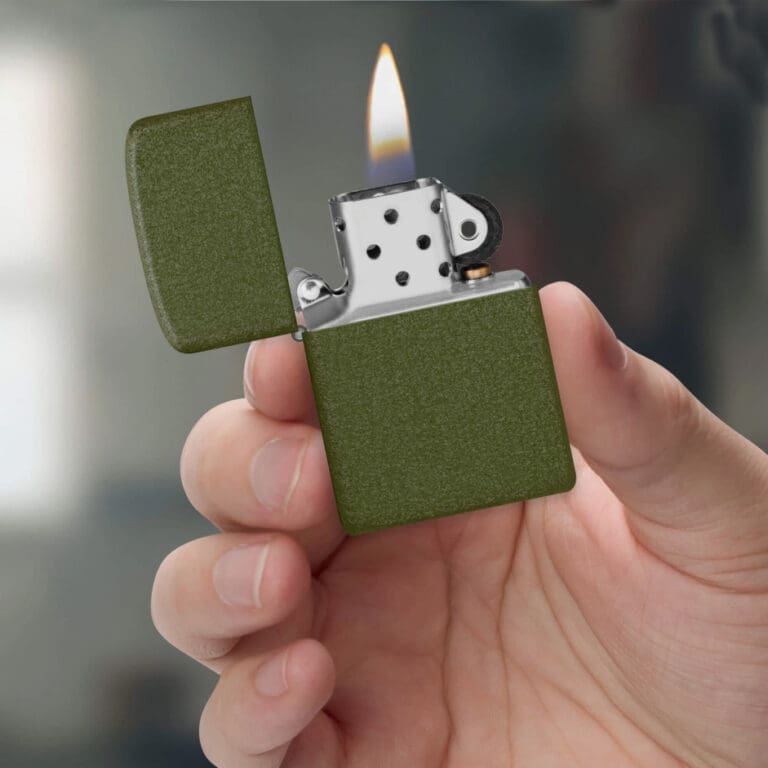
A soft flame is the familiar yellow flame produced at relatively low velocity. It moves gently with surrounding air and remains easy to see. On S.T. Dupont’s heritage collections, the flame is part of a larger sequence: open the cap, turn the roller, allow the flame to establish and approach the tobacco gradually.
The method rewards patience. Because heat is less concentrated than a torch, the user can work around a cigar’s foot slowly and observe the progression. The trade-off is sensitivity to wind. A beautiful soft flame indoors may become difficult to maintain on an exposed terrace.
What Is a Torch Flame?
A torch mixes and directs fuel into a concentrated blue jet. The flame is hotter at a smaller point and resists moving air more effectively. This makes it useful outdoors and efficient for cigars, but it also requires distance and motion. Holding concentrated heat too close to one spot is unnecessary and can char the foot unevenly.
S.T. Dupont’s torch family is unusually broad. MaxiJet emphasizes ergonomic daily use, Slim 7 compresses a wind-resistant torch into an ultra-thin body, and Biggy spreads heat through an approximately two-centimetre flat flame.
Best Qualities
- Calm, visible and easy to approach gradually
- Strong connection to the classic cap-and-roller ritual
- Well suited to relaxed indoor use
- Collector appeal through Ligne 1 and Ligne 2
Best Qualities
- Focused heat and faster ignition
- Greater resistance to wind
- Useful across cigar sizes with correct technique
- Available in slim, compact and broad-flame formats
Soft Flame vs Torch: Complete Comparison
| Factor | Soft flame | Torch flame | Advantage |
|---|---|---|---|
| Heat pattern | Broad, gentle and naturally moving | Concentrated and directional | Depends on preferred control |
| Wind resistance | Limited in exposed conditions | Strong on wind-resistant models | Torch |
| Learning curve | Intuitive but slower | Quick, but distance and motion matter | Soft flame for beginners |
| Large cigars | Even results with patience and rotation | Faster; broad torches cover more area | Biggy or Le Grand for speed |
| Indoor ceremony | Excellent visibility and atmosphere | More technical and direct | Soft flame |
| Pocket options | Compact, but often substantial | Ranges from MiniJet to 7 mm Slim 7 | Torch |
| Collector sound | Available with hinged-cap icons | Jet models use different mechanisms | Soft-flame Ligne 2 |
| Versatility | Excellent in calm conditions | Adapts to more outdoor situations | Dual-system Le Grand combines both |
The Soft-Flame Choice: Ligne 2 and Ligne 1
Ligne 2: When the Ritual Is the Luxury
Ligne 2 is the model most collectors imagine when they hear S.T. Dupont. The harmonious rectangular body, hinged cap and famous opening “cling” create a complete sensory performance before the flame appears. Current references can vary in flame configuration, including single or double yellow flames, so check the exact listing rather than assuming every Ligne 2 behaves identically.
Choose it when you usually light indoors or in calm surroundings and enjoy taking time. Its appeal is not maximum speed. It is the smooth sequence and the feeling that a familiar action has been refined.
A Flame Surrounded by Craft
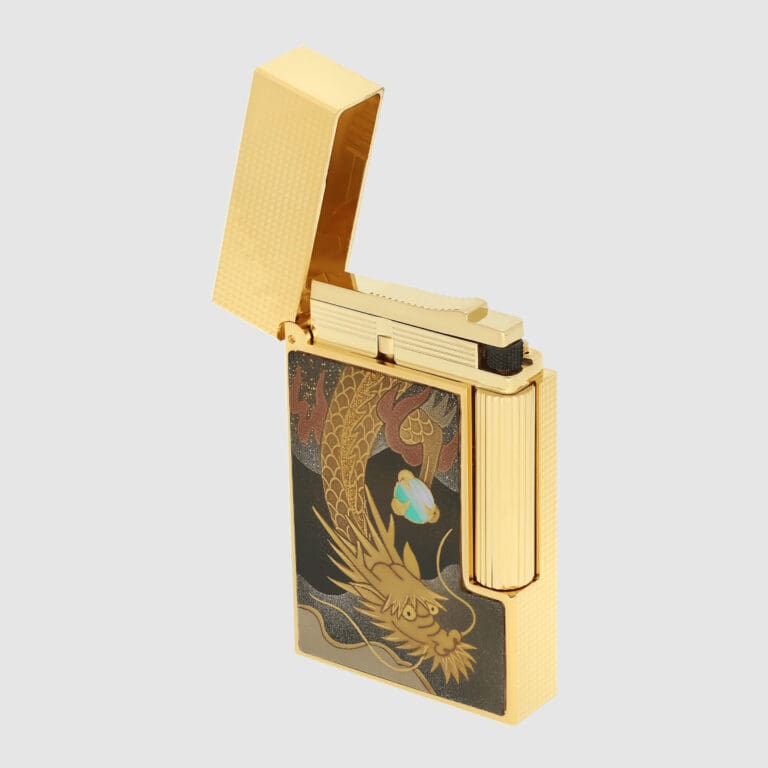
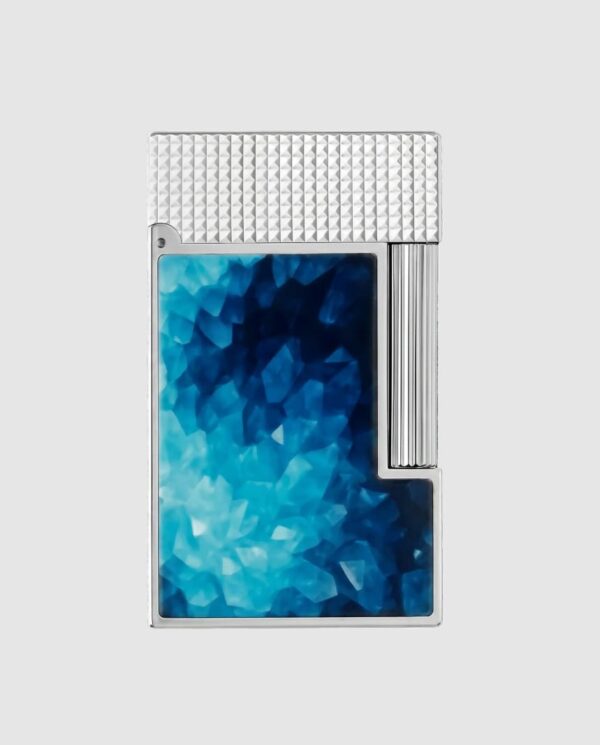
The Blue Geode Ligne 2 surrounds the traditional mechanism with deep blue lacquer, palladium appointments and micro diamond-head texture. This is why collectors accept the soft flame’s limitations outdoors: the entire object, not only ignition speed, is the experience.
Ligne 1: Compact Heritage
Ligne 1 offers a compact route into the house’s traditional soft-flame language. It appeals to vintage-minded buyers and collectors who appreciate the evolution of S.T. Dupont design. If Ligne 2 feels too familiar or slightly too large, a current Ligne 1 Perfect Ping reference can provide a more connoisseurial answer.
Tradition With a Cigar-House Story
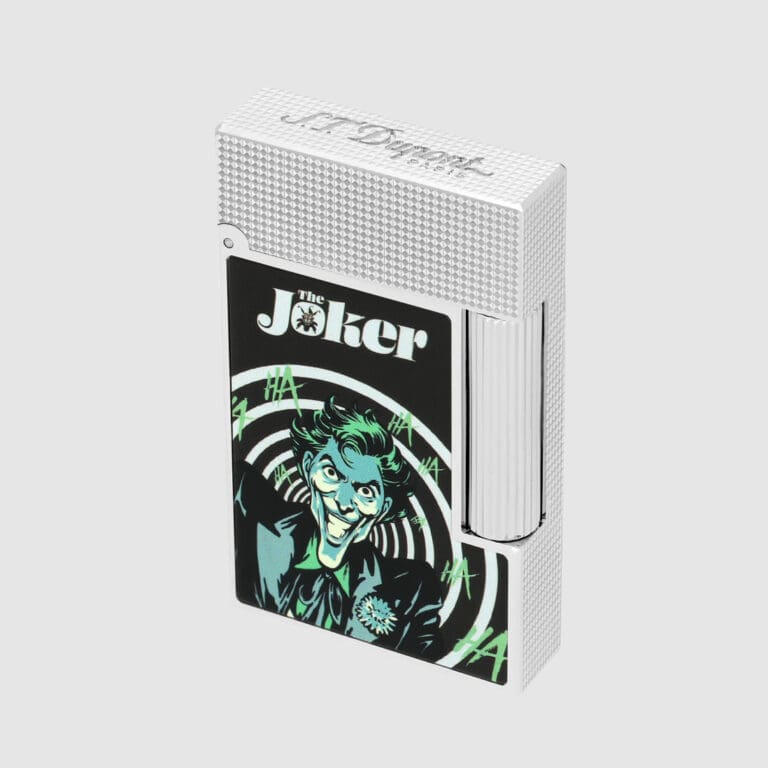
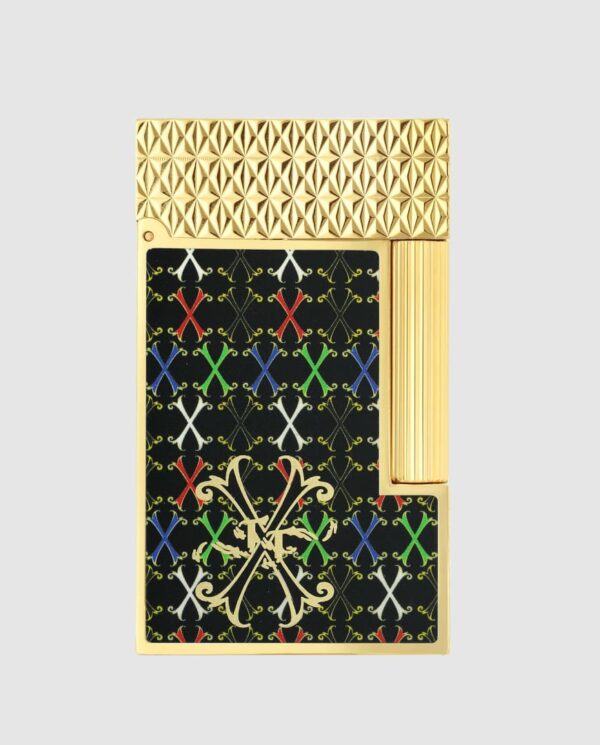
A collaborative Ligne 2 turns the relaxed flame ritual into a meeting of two collecting worlds. Choose the edition because its imagery matters to you, not merely because it is less common.
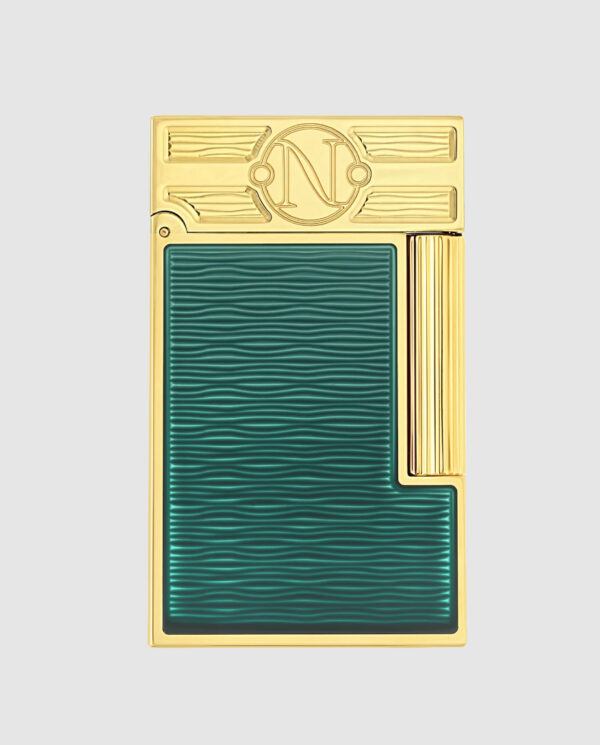
For the Slow Evening
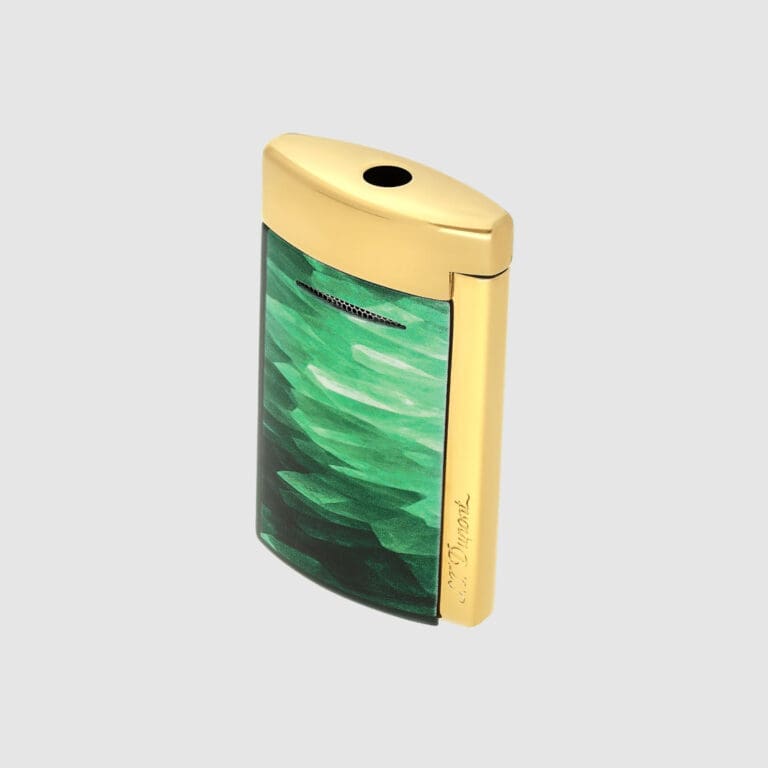
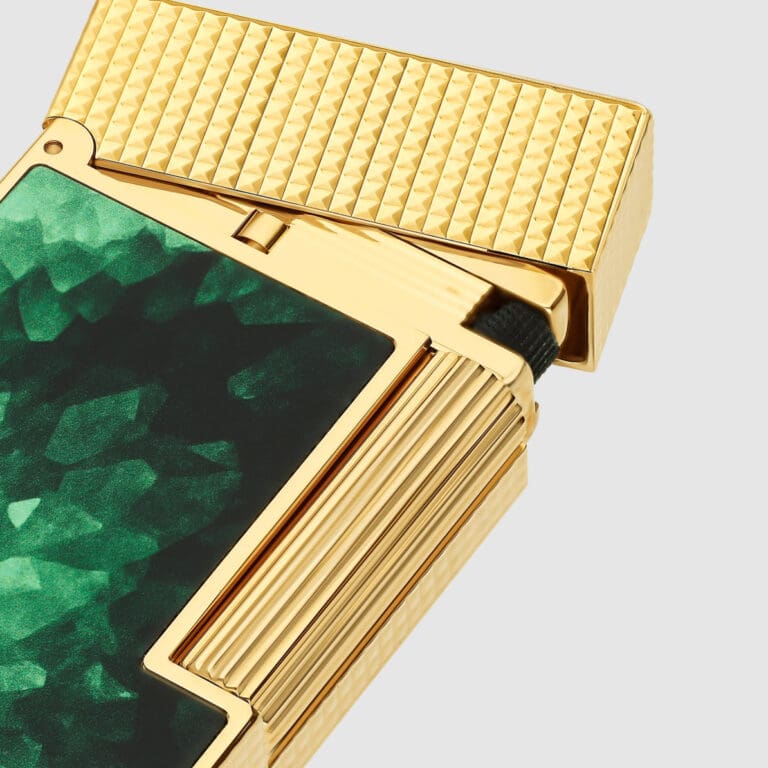
Saturated Green Pacific lacquer and the hinged-cap mechanism make this a natural indoor collector piece. It rewards an owner who notices sound, reflection and pacing.
The Torch Choice: Biggy, Slim 7, Slimmy, Twiggy and MaxiJet
Biggy: Broad Torch for Large Ring Gauges
Biggy uses an approximately two-centimetre flat blue flame on current standard references. The wider heat pattern covers more of a large cigar’s foot than a narrow pinpoint jet, while its rectangular body echoes Ligne 2. It is the torch choice for someone who wants bold visual presence rather than a purely technical tool.
Slim 7: Wind Resistance Without Pocket Bulk
Slim 7 is approximately seven millimetres thin and about 44 to 45 grams on standard references. Its flat blue flame is wind resistant, making it ideal for travel and formal clothing. S.T. Dupont advises holding a cigar a few centimetres from the torch and turning it to light the circumference evenly—good technique for any concentrated flame.
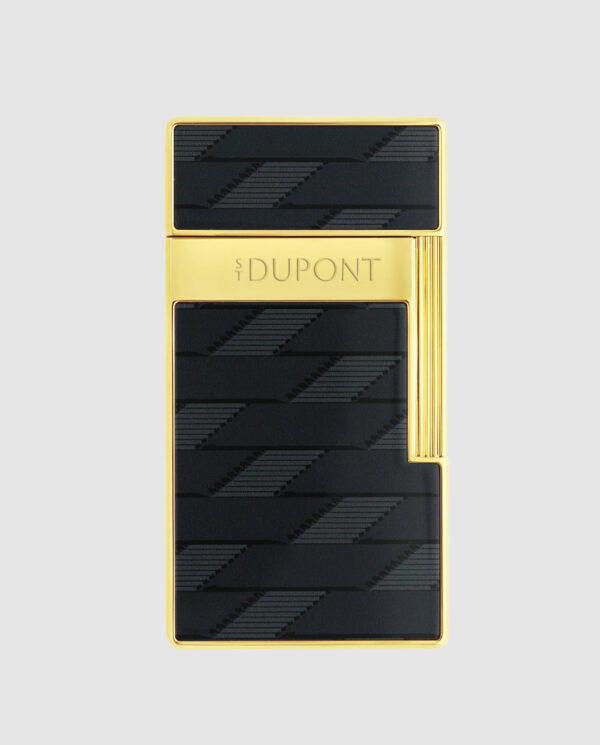
Modern Performance, House Proportions
Biggy is persuasive when a narrow utilitarian jet feels too ordinary. Its broad flame and Ligne 2-inspired body make cigar performance part of the visual statement.

Built for the Pocket
Slim 7 turns flame choice into a carry decision. It is the answer for an owner who wants premium torch performance without the weight and thickness of a ceremonial lighter.
Slimmy and Twiggy: Torch Flame as Personal Style
Slimmy bridges the compact engineering of Slim 7 and the formal rectangular presence of Ligne 2. Twiggy stretches the idea into a slender 1960s-inspired fashion object. Both use a wide blue torch, but Slimmy feels architectural while Twiggy feels decorative and dress-led.
MaxiJet and MiniJet: Practical Daily Torches
MaxiJet is the direct recommendation for frequent cigar smokers who prioritize grip, consistency and uncomplicated use. MiniJet reduces the idea into a smaller and generally more approachable format. Neither aims to reproduce the Ligne 2 sound; their luxury lies in purposeful design and finish.
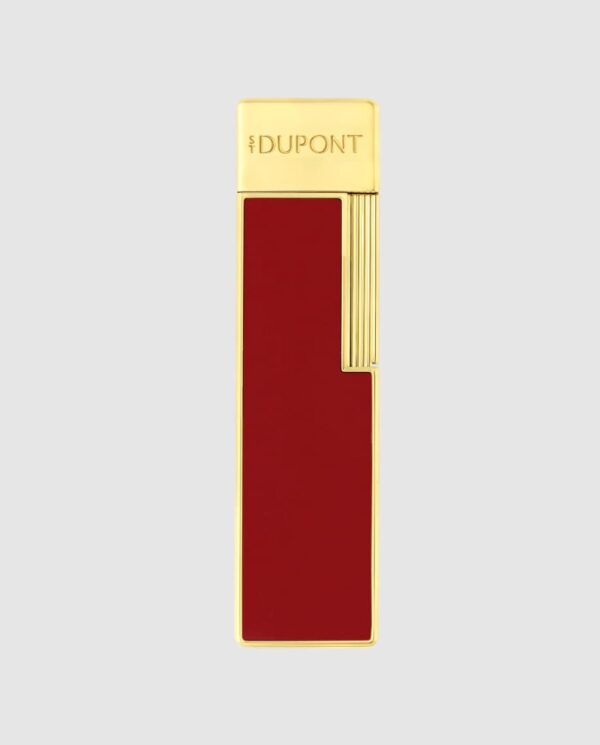
When Performance Becomes an Accessory
Twiggy’s raspberry lacquer, gold appointments and elongated body prove that a torch lighter need not look aggressively technical. It suits the buyer who wants blue-flame convenience but chooses accessories with the eye of a fashion collector.
Le Grand: Why Choose When You Can Have Both?
Selected Le Grand references solve the soft-versus-torch question through a dual ignition system. The lighter begins with a double soft flame that gently warms a cigar. Operating the roller selects the blue torch for more concentrated ignition. The system is especially compelling for collectors who enjoy the traditional approach but smoke in situations where a torch is often useful.
The compromise is physical rather than functional: Le Grand is large, substantial and deliberately imposing. It does not replace Slim 7 as a light travel companion. It replaces the need to keep two flame types on the cigar table.
How to Light a Cigar With Each Flame
Using a Soft Flame
- Work in a calm, well-ventilated area away from loose material and other fuel.
- Hold the cigar above the visible flame without burying the foot directly in it.
- Rotate the cigar slowly so heat reaches the entire outer edge.
- Once the rim is evenly toasted, draw gently while continuing to rotate.
- Inspect the glow and touch up only the areas that need it.
Using a Torch Flame
- Point the lighter safely away from your face and ignite it in open space.
- Keep the cigar several centimetres from the concentrated flame.
- Move the torch in short passes while rotating the cigar continuously.
- Allow the heat—not direct contact with the blue cone—to toast the circumference.
- Release the control, confirm the flame is extinguished and let the lighter cool.
Which Flame Matches Your Life?
Choose Ligne 2
You value the cap sound, lacquer, weight and a slow visible flame more than wind resistance or minimum pocket size.
Choose Le Grand
You want a substantial collector piece and selected dual-system references that support both soft-flame ceremony and torch precision.
Choose Biggy
You prefer a broad flat torch that distributes heat across more of the foot while retaining a luxurious rectangular body.
Choose Slim 7
You need wind resistance and an exceptionally thin, light lighter that does not interrupt a jacket line.
Choose MaxiJet
You want ergonomic, repeatable torch performance and care less about a hinged-cap ceremony.
Choose Twiggy or Slimmy
You want modern blue-flame function dressed in a distinctive silhouette and expressive lacquer finish.
The Collector’s Test: Choose the Experience, Then the Finish
Collectors often begin with lacquer color or limited-edition artwork, yet the flame system determines how often a lighter will leave its display case. Imagine the first thirty seconds of your usual cigar. Are you seated indoors, listening for the cap and watching a yellow flame move around the foot? A soft-flame Ligne 2 turns that moment into ceremony. Are you standing on a terrace, lighting quickly before conversation resumes? A wind-resistant torch will probably become the piece you reach for more often.
The same test helps when buying a gift. A recipient who wears tailored jackets and travels frequently may appreciate Slim 7’s light profile more than a heavier table presence. Someone building a collection around lacquer, guilloché and the signature S.T. Dupont opening note is more likely to treasure Ligne 2. For a dedicated cigar enthusiast whose routine changes from lounge to terrace, Le Grand offers the most compelling single-object story because the user can move from gentle preheating to concentrated ignition.
Finish should come second, but it is not superficial. Lacquer can make a lighter feel jewel-like and personal; brushed metal hides fine handling marks more gracefully; polished finishes create greater visual drama but reward careful storage. Limited editions add narrative, although rarity should never substitute for a flame you genuinely enjoy using. The strongest collection is not necessarily the largest—it is the one in which each piece has a distinct role: perhaps a Ligne 2 for the lounge, a Slim 7 for travel and a Biggy for larger cigars.
Fuel, Care and Safe Use
Fuel and refill fittings vary among S.T. Dupont collections and generations. Use the gas, adapter and flint specified for the exact reference rather than choosing by flame type alone. Keep refill operations away from ignition sources, allow the lighter to return to room temperature and stop using it if you suspect a leak or damaged control.
Torch nozzles and soft-flame mechanisms should both be kept free of debris. Protect lacquer and polished metal from abrasive pocket contents. For persistent ignition problems, leaks or mechanical damage, professional service is the sensible choice.
Frequently Asked Questions
Is a soft flame or torch better for cigars?
Both can light cigars well with correct technique. A soft flame offers slower, visible control in calm conditions, while a torch is faster and more wind resistant. Large cigars may benefit from Biggy’s broad torch or the dual-system versatility of selected Le Grand models.
What is the main difference between soft and torch flames?
A soft flame is a gentle yellow flame that moves with surrounding air and supports gradual lighting. A torch is a concentrated blue jet with more focused heat and greater wind resistance, so distance and continuous movement are important.
Which S.T. Dupont lighters use a soft flame?
Ligne 1 and Ligne 2 are the principal heritage soft-flame collections. Exact flame configurations can vary by reference, including single or double yellow flames, so buyers should verify the individual product listing.
Which S.T. Dupont torch lighter is best for cigars?
Biggy is excellent for larger ring gauges because its broad flat torch covers more of the cigar’s foot. MaxiJet is a practical everyday cigar torch, while Slim 7 is ideal when wind resistance and ultra-thin carry matter most.
Does S.T. Dupont make a lighter with both flame types?
Yes. Selected Le Grand references use a dual ignition system that provides a double soft flame and a blue torch selected through the roller. Confirm the exact reference because features can vary within a collection.
Can a torch flame damage a cigar?
A concentrated torch held too close or left on one point can char the foot unevenly. Keep the cigar several centimetres from the flame, rotate it continuously and use short passes so the heat reaches the circumference evenly.
Are soft-flame lighters windproof?
No. A traditional soft flame is sensitive to moving air and is best suited to indoor or calm conditions. A wind-resistant torch model such as Slim 7, MaxiJet or Biggy is generally more practical outdoors.
Does KingZendo ship S.T. Dupont lighters with fuel?
No. KingZendo ships premium lighters empty of fuel because of transportation and safety restrictions. Use the fuel and refill adapter specified for the exact model and follow the supplied instructions before first use.
Find Your S.T. Dupont at KingZendo
Explore classic soft-flame icons, modern wind-resistant torches and dual-system collector pieces. Compare the models by the way you actually smoke, travel and enjoy the ritual—then choose the lacquer or metal finish that makes it yours.